
Interactive virtual model for outreach: Red Viva, the experience created for Iberdrola

An interactive virtual model for outreach designed to help understand the electrical grid
When we talk about a modern electrical grid, we are talking about a system that is constantly moving: it generates, distributes, adapts, responds to demand and coexists with new forms of consumption. Explaining it clearly isn't always easy, especially when the audience doesn't necessarily understand the technical language of the energy sector..
Therefore, in the Red Viva project for Iberdrola, the starting point was to build an interactive virtual model for outreach purposes that would help people understand the network through experience. The idea was not to showcase a static infrastructure, but to create a physical and digital installation where every user decision would have an immediate visual response. The model had to explain without overwhelming, guiding the visitor step by step.
A learning experience by doing
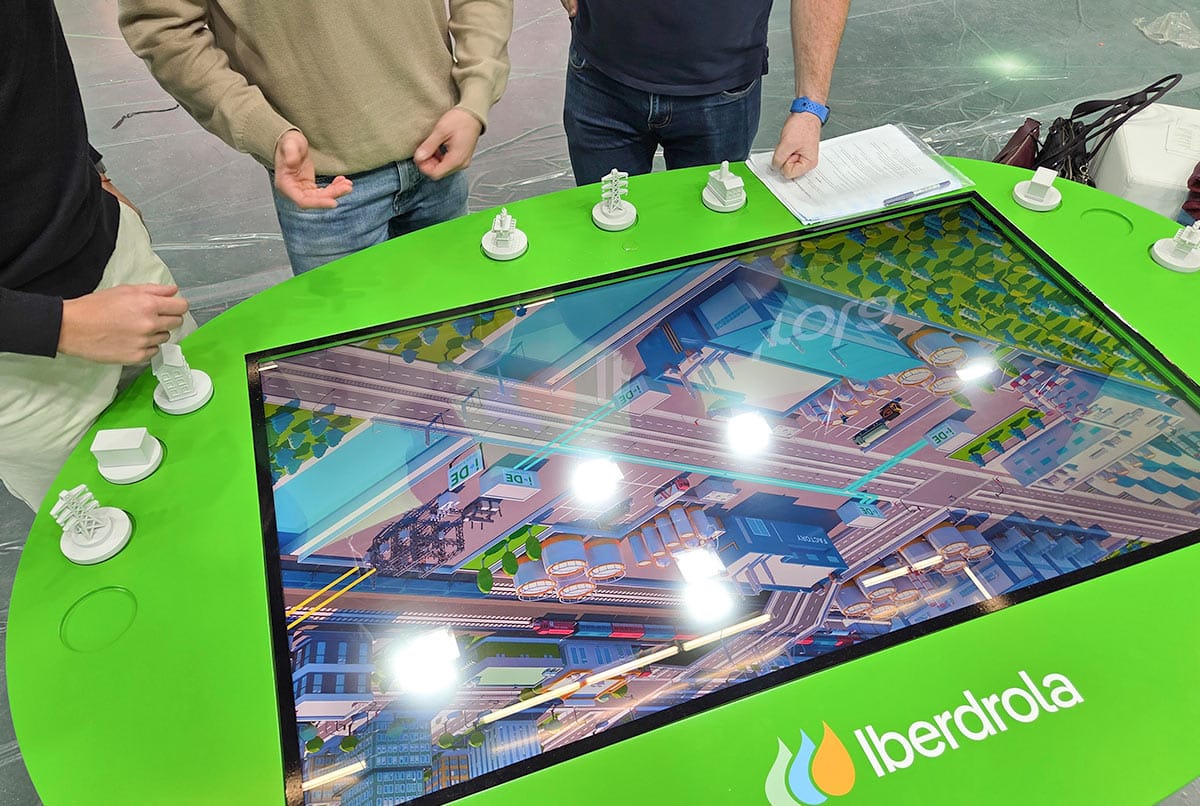
The solution was designed so that the visitor would not be a passive spectator. Instead of just looking at a screen, participate by placing physical pieces on NFC sensors and seeing how those actions modify the digital city.. That simple gesture—picking up a power tower, a battery, or a solar plant and placing it where it belongs—transforms information into a small decision. In this way, the interactive virtual model for educational purposes explains concepts such as generation, consumption, transformation, and grid stability in a much more intuitive way.
The user learns because they participate, make mistakes, correct them, and see the result in real time. The experience is organized with an introduction or standby state and four interactive scenes, designed to guide the journey without making it tedious or overly technical.
A digital city where the electrical grid comes to life
To ensure the experience was clear from the outset, the digital component of the model was conceived as a continuous virtual city, designed in isometric view. This approach allows users to see the electrical grid within a recognizable environment, with generation, consumption, and infrastructure zones integrated into a single scene.
In an interactive virtual model for outreach, this type of view is very helpful: it organizes the information, facilitates spatial reading, and allows the visitor to understand where each action takes place. The city does not function as a mere backdrop, but as the stage where the network is explained in motion.
Visual animations to guide the user
The digital environment is enhanced with subtle animations—birds, clouds, vehicles, and visual indicators—that help the experience feel alive without distracting from the main objective. Everything is designed to guide the user: pointing out what to look for, reinforcing the progression of each scene, and showing how the network responds when the physical pieces are correctly positioned.
In this type of model, The clean, colorful, and minimalist aesthetic has a very specific function: to make technical concepts seem approachable, organized, and easy to follow. Each visual element adds information without making the screen confusing.
Physical parts and NFC sensors: when the model responds
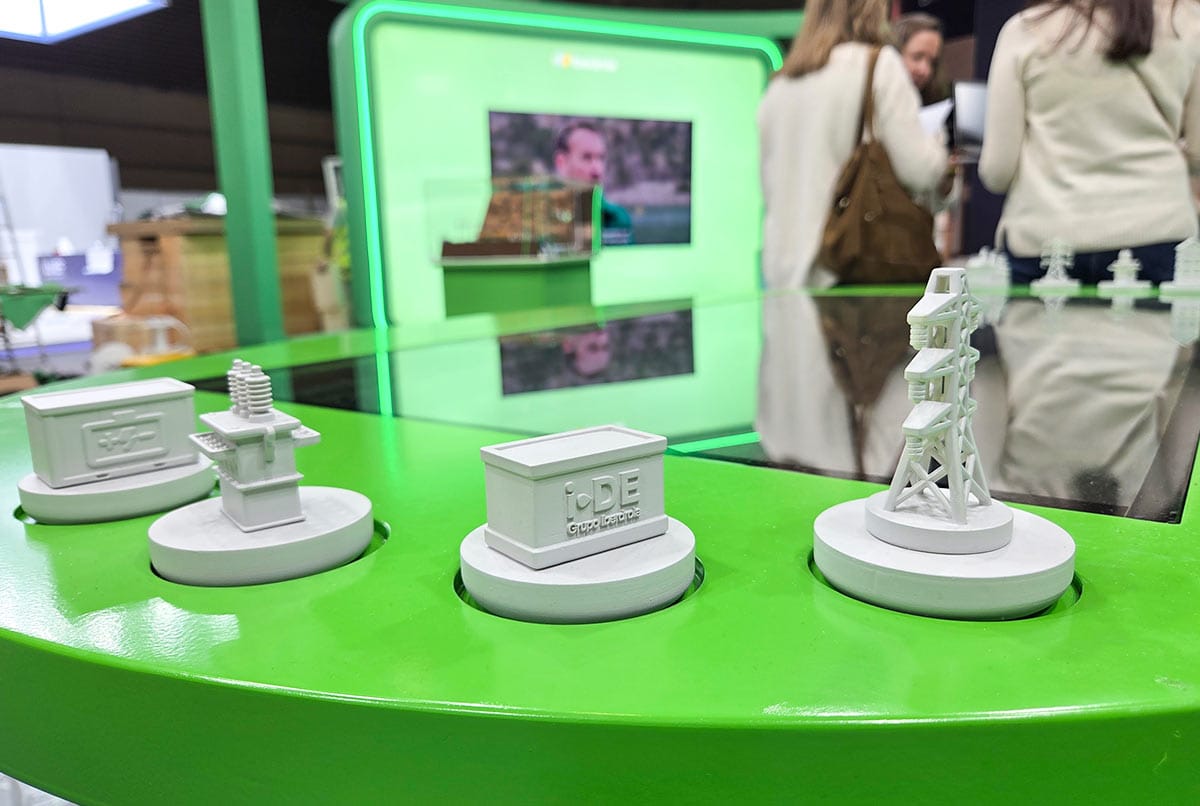
One of the most interesting aspects of the Red Viva project is that the digital experience is born from a physical gesture. The visitor does not press a button or navigate through a menu: they take a volumetric representation of the element and place it on the indicated point. Substations, transformer centers, power towers, solar plants, wind turbines, batteries, homes, factories, or even a storm cloud become manipulable elements within the narrative.
In an interactive virtual model for outreach, this direct contact makes the explanation more personal and memorable. When the user touches the model, they become part of the network.
Each piece triggers a digital response
The NFC technology It allows each piece to be uniquely recognized by the system. When placed on the corresponding sensor, the digital environment reacts: if the selection is correct, the element appears integrated into the scene; if not, the screen displays a warning so the user can correct it.
This immediate response makes mistakes a natural part of learning, without interrupting the flow of experience. Thus, this interactive model It does not simply display information, but proposes a small dialogue between the visitor, the physical pieces and the digital city. The model responds, guides, and visually confirms each decision.
An installation designed for exhibition spaces
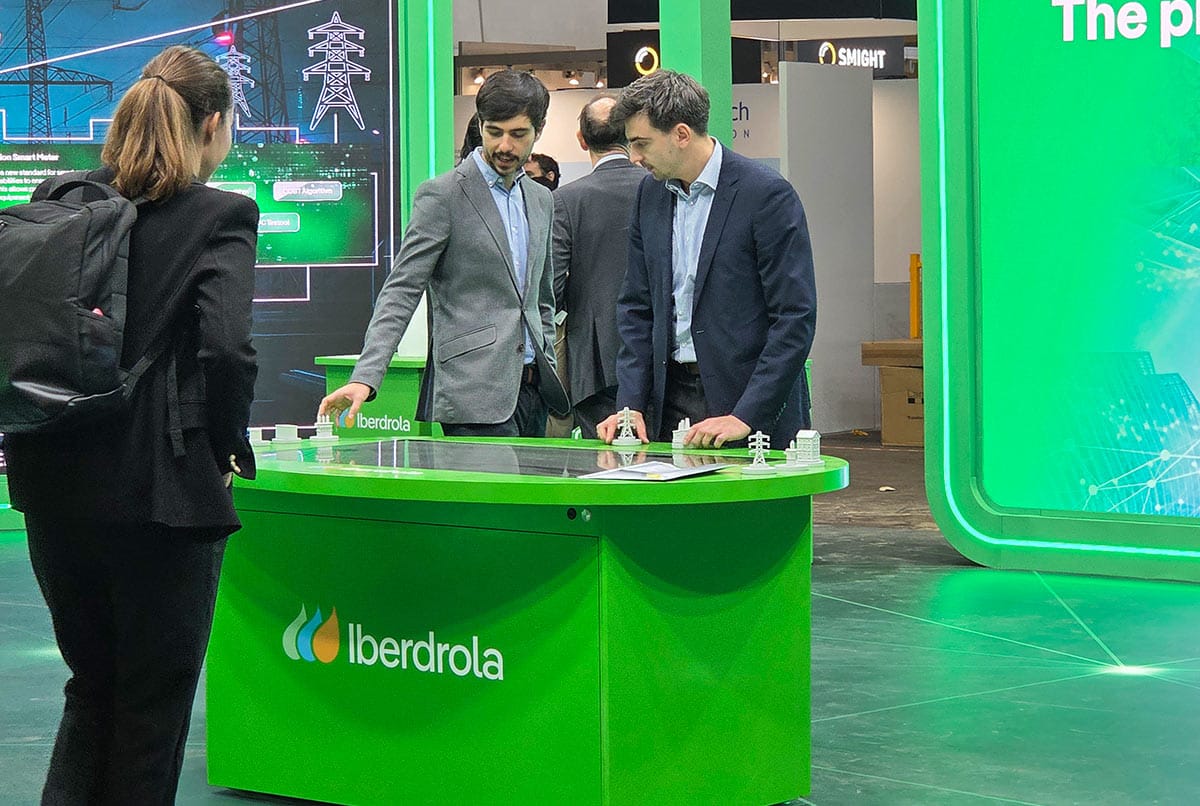
In an experience like Red Viva, the furniture couldn't be resolved as a simple support. It had to house sensors, components, wiring, electronics, and a screen in a clean, safe, and coherent way with the exhibition environment.
Therefore, a custom design was conceived, with durable surfaces, defined spaces for placing the pieces, and concealed conduit that keeps all the technical aspects out of the visitor's view. In an interactive virtual model for educational purposes, this type of integration is essential so that the technology complements the display without overshadowing it. The important thing is that the user sees the experience, not the mechanism that makes it possible.
A model designed for diverse audiences
The installation was also designed for real-world use in high-traffic areas: for children, adults, school groups, or visitors who approach out of curiosity. The 3D-printed pieces are designed with durable materials, ergonomic shapes, and a comfortable size for easy handling.
In addition, the system allows for a quick understanding of the dynamics: observe the challenge, choose the pieces, place them in order, and check the answer on the screen. When a model is intuitive, communication flows much more naturally. That ease of use is key to making the experience work without lengthy explanations or constant support.
Learning by making decisions within the network
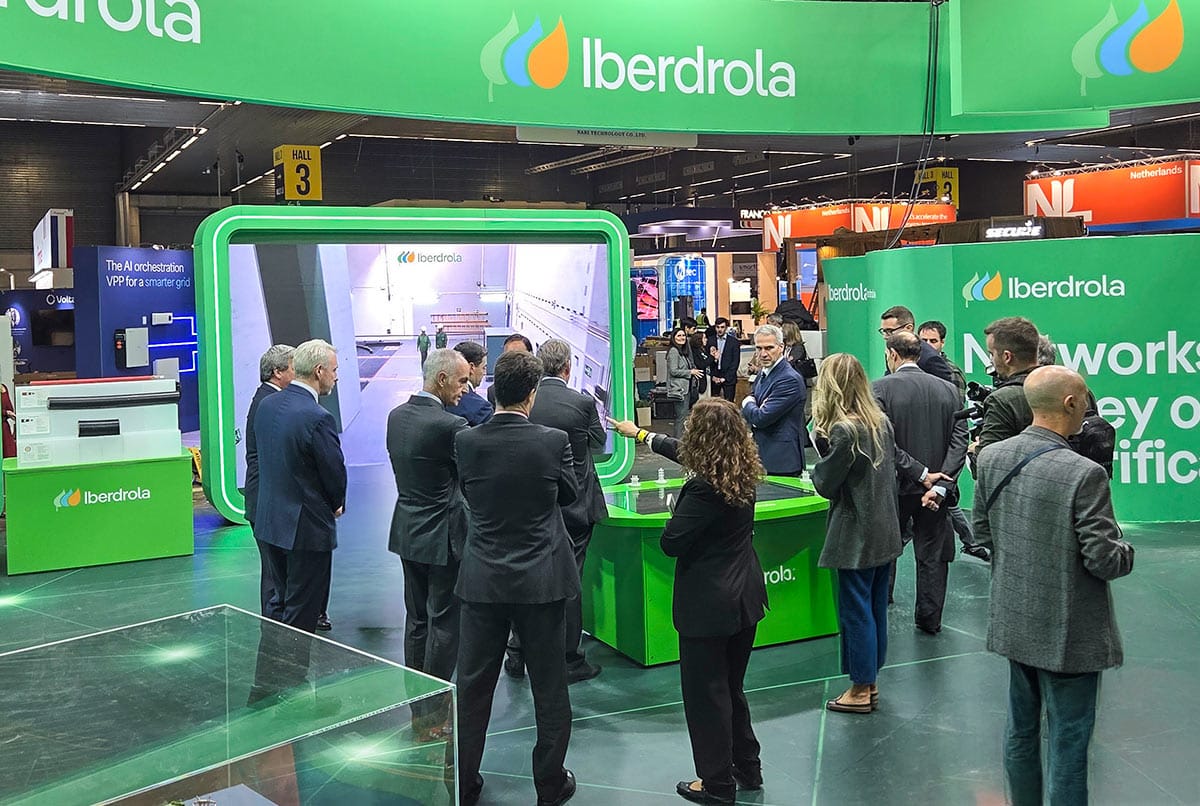
The gameplay of Red Viva is structured around an initial introductory or standby scene and four interactive scenes. In the first scene, the camera slowly rotates around the digital city while the screen displays the game's basic instructions. Afterward, each scene presents a specific challenge related to the operation of the electrical grid.
The user sees the problem, identifies the three necessary elements, and places them on the sensors in the indicated order. In an interactive virtual model for educational purposes, this structure helps the experience progress smoothly without losing clarity. Each scene turns a technical idea into a small, understandable mission.
Validate, correct, and see the network working
The most educational part comes when the system validates the visitor's actions. If they place the correct piece, it appears in the digital city, replacing its semi-transparent version; if they make a mistake, they receive a message to correct it and continue trying. Once the sequence is complete, the screen displays an animation of the solution and shows how the network is functioning again.
Thus, the interactive virtual model for Iberdrola's outreach transforms a complex infrastructure into a clear, participatory and easy-to-remember experience. The user does not just receive information: they construct it with their own decisions.

Did you enjoy this article?
Want to see other similar posts?

