Model making guide

Complete guide

to commission a professional model

A practical resource to find out what type of model you need, what information to prepare and how to avoid mistakes before manufacturing.

The most important factors

A good model doesn't start in the workshop, but with a well-defined idea: what it should communicate, how it should be read, and what result it should produce.

1. Objective

When the objective is well defined, the whole process is simpler: the scale is better chosen, the level of detail is adjusted, and unnecessary elements are avoided.

2. Public

Designing a model for an end customer, a technical committee, a museum visitor, an investor, or a sales team is not the same.

3. Location

The space determines the size, resistance, lighting, transport, exposure height and degree of interaction.

1. Objective

When the objective is well defined, the whole process is simpler: the scale is better chosen, the level of detail is adjusted, and unnecessary elements are avoided.

2. Public

Designing a model for an end customer, a technical committee, a museum visitor, an investor, or a sales team is not the same.

3. Location

The space determines the size, resistance, lighting, transport, exposure height and degree of interaction.

1. Objective

When the objective is well defined, the whole process is simpler: the scale is better chosen, the level of detail is adjusted, and unnecessary elements are avoided.

2. Public

Designing a model for an end customer, a technical committee, a museum visitor, an investor, or a sales team is not the same.

3. Location

The space determines the size, resistance, lighting, transport, exposure height and degree of interaction.

Choose the appropriate model according to the type of project

Each project requires a different solution. Compare the main model families and access specific articles.

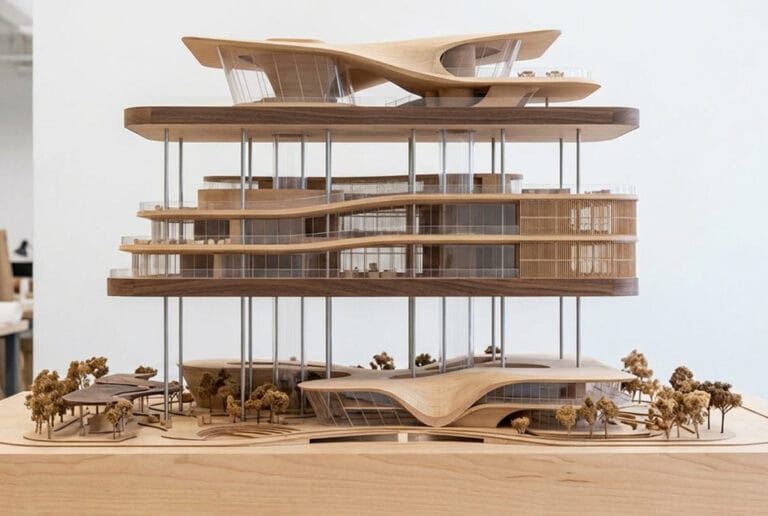
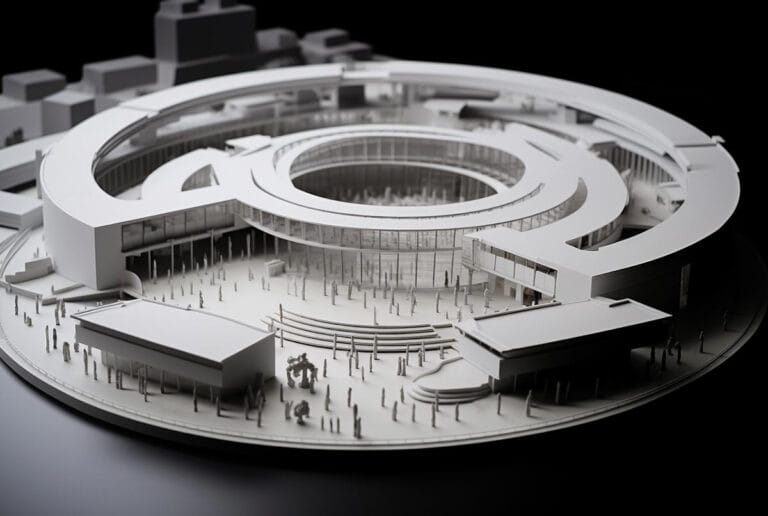
Suitable for buildings, real estate promotions, competitions, urban developments, landscaping and presentations. .

Designed for industrial plants, machinery, technical processes, energy installations, infrastructure and engineering projects.

Suitable for exhibitions, interpretation centers, heritage, accessibility, scientific dissemination and territory.

Recommended when the model needs to do more than just represent: illuminate routes, activate content, show phases, or explain data.

What do we need to budget for a model?

To prepare a realistic budget, the workshop must understand What do you want to represent, and for what purpose?d, what documentation exists, What level of detail do you expect, and where will it be installed? and whether there will be special requirements for lighting, interaction, transport or assembly.

The more information available from the start, the easier it will be to adjust the scope, estimate deadlines, avoid unnecessary items, and obtain viable solutions. 

Purpose and use

Indicate what the model will be used for: commercial presentation, trade fair, museum, tender, training, real estate sale, technical explanation or permanent exhibition.

Available documentation

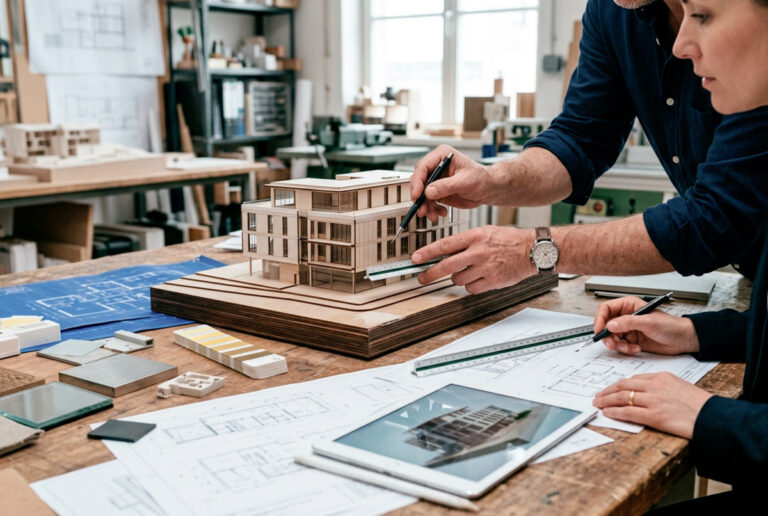
Provide plans, renderings, CAD/BIM/3D files, photographs, technical reports, process diagrams or visual references that help to understand the project.

Scale and dimensions

Define, if possible, the approximate scale, the maximum available size and the limitations of the space where the model will be placed or transported.

Level of detail

Clarify which elements are essential, which areas should be highlighted, and which parts can be simplified to optimize budget and visual readability.

Delivery time, transport and installation

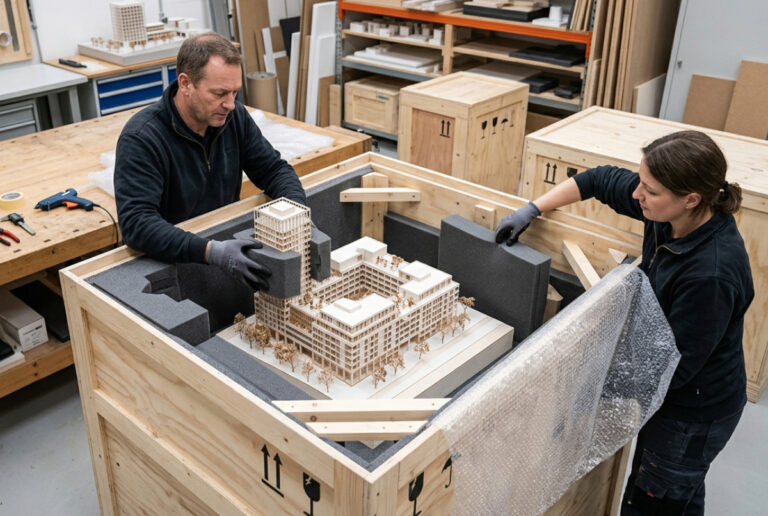
Specify the target date, delivery location, access conditions, packaging requirements, modularity, assembly, or on-site assistance.

Articles that you may find useful

Avoid mistakes, wasted time, and unnecessary investments

A professional prototype shouldn't go directly from concept to manufacturing: first, the scope must be reviewed, criteria validated, deadlines confirmed, and any technical questions resolved. An organized process prevents last-minute changes, delays, and cost overruns.

More resources to make better decisions

In addition to choosing and ordering a model correctly, it is also important to know aspects that influence its long-term use: maintenance, materials, sustainability, new technologies, industry trends and ways to combine the physical model with digital resources.

Your budget in

48 Hours

Logo_web.png

Madrid – C/ Careluega, 81, 4ºA
Lorquí – C/ Río Quipar, 13

info@iamanufacturing.com

Madrid
+34 910 608 058

Murcia
+34 968 007 991

It is necessary to load content from reCAPTCHA To submit the form. Please note that by doing so you will be sharing data with third-party providers.

More information

*The estimated time for preparing the budget will depend on the material received and the nature of each project.