
A model of an industrial energy storage system for Cegasa

¿How to display everything inside a battery container on a stand? That was the question posed to us by the Cegasa project. The challenge was to showcase, in an accessible way, the various solutions offered by their E/Strem CNT team.
To do this, we shaped it with a model of an industrial energy storage system 2.20 meters long. We wanted the Cegasa team to be able to rely on it to explain their technology., pointing out each item while conversing with the visitors.
An interior open to the view
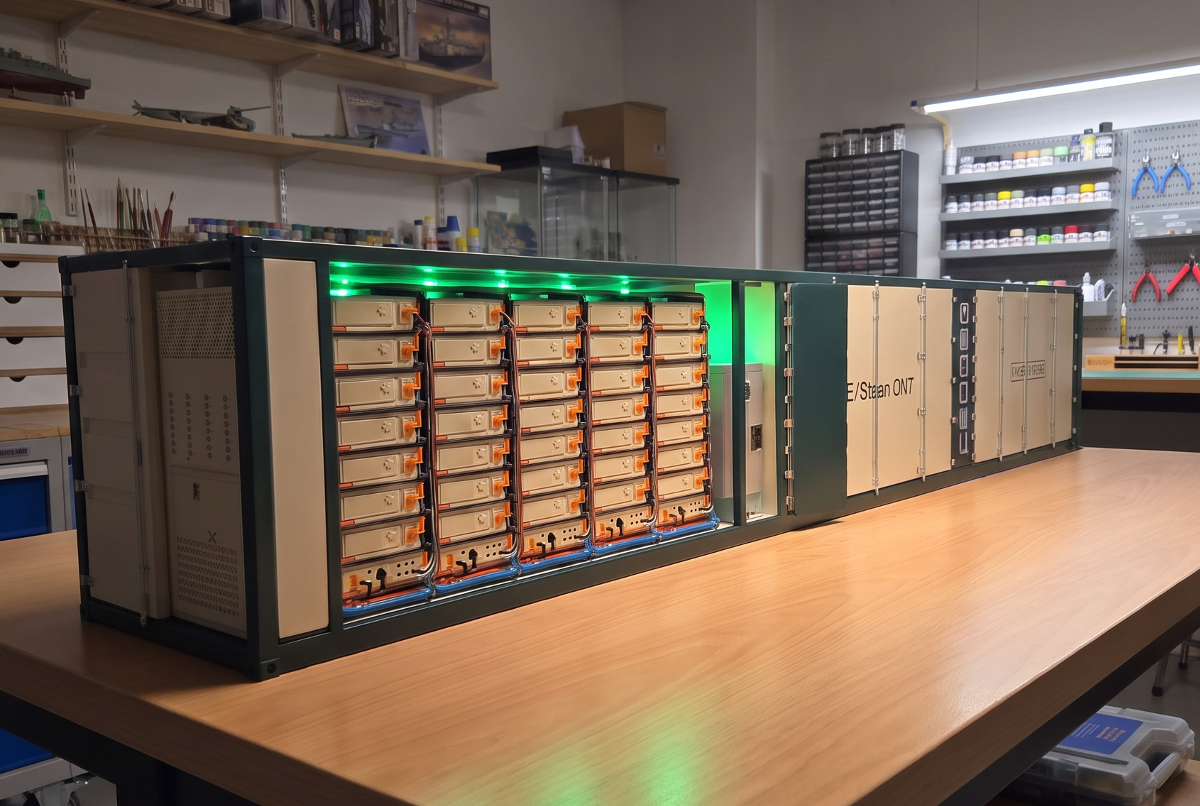
To allow visitors to see the interior, we left one module open on each side of the model. These openings allow you to appreciate the battery racks and their relationship to the cooling ducts, wiring, control boxes, and fire suppression system.
Each element forms part of the overall representation. The arrangement of the components helps to follow the team's explanation and offers different points of observation around the piece.
From the real team to its scaled-down components
The work began with the technical documentation from Cegasa. Using their plans and 3D files, we adapted the equipment to the dimensions of the model and broke down the elements that we had to manufacture.
Reducing the size requires a review of how each piece is constructed., Especially when there are small components that need to remain recognizable. In this phase, we define how to represent the different parts and how to fit them within the container, maintaining proportions and leaving space to integrate the lighting.
Design with the exhibition space in mind
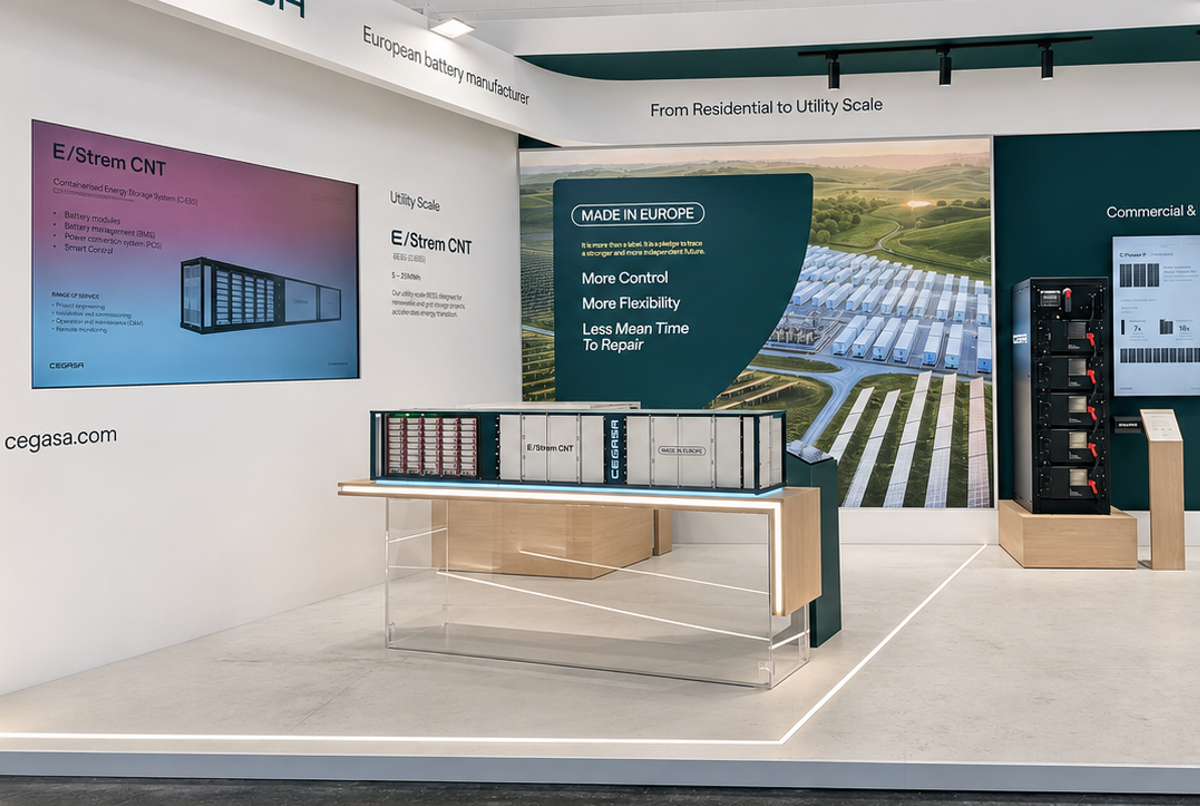
One of the most important parts of the initial work was adapting the model to the style of the stand where it was to be installed. This influenced the design, the finishes, and how the piece was placed on its support.
The model and the furniture had to work as a set. Therefore, these decisions were incorporated into the development of the project: in addition to representing the E/Strem CNT, we had to figure out how a piece would fit into the space prepared to display it.
Manufacturing a model of an industrial energy storage system
Different techniques for solving each piece
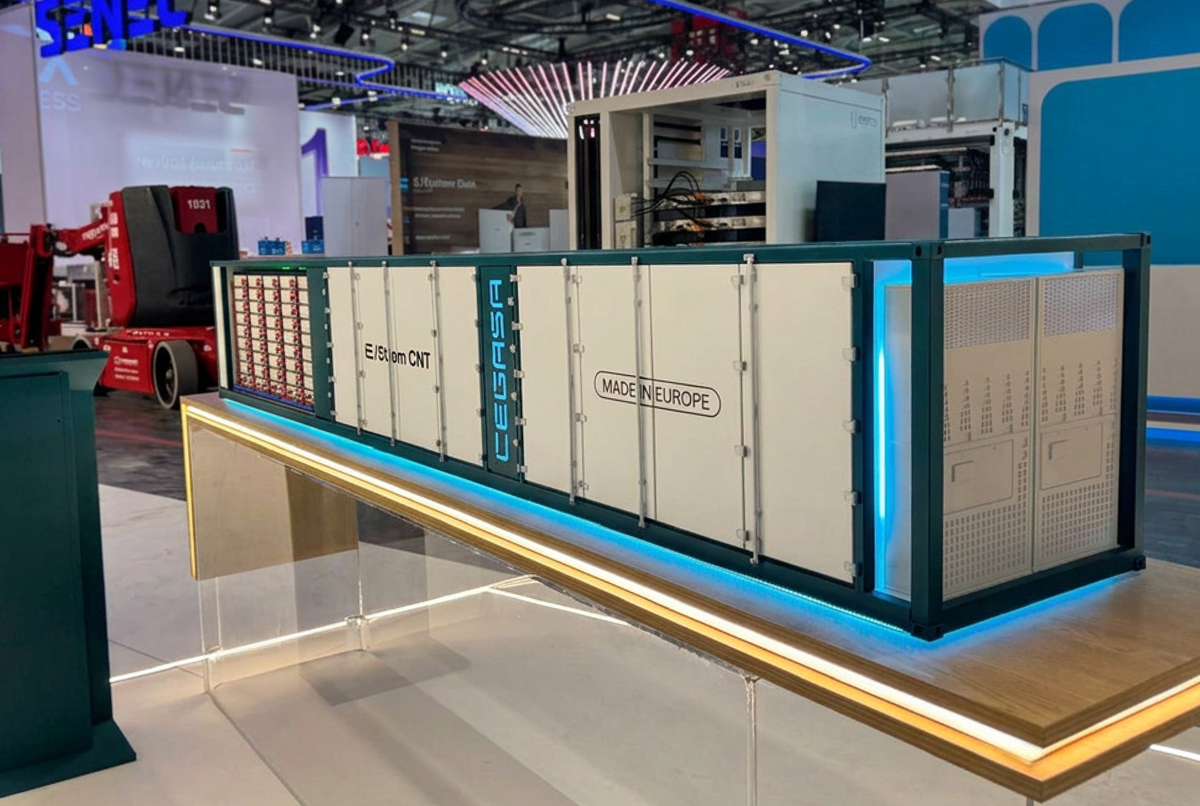
As is typical in our workshop, there's no single manufacturing technique that solves everything. To build the model, we combine 3D printing, laser cutting, and machining, working with different materials depending on the needs of each element.
Choosing how to manufacture each piece was (as always) the most important part of developing the model. Their geometry, size, and finish helped us decide which technique to use in each case. Then, all those pieces had to fit together in the assembly and maintain the proportions we had defined based on the documentation.
A common finish for different materials
When combining materials and processes, the finish takes on special importance: The pieces have to be seen as parts of the same team.
In the Cegasa model, the paintwork and corporate branding allowed us to maintain continuity and reproduce the image of the E/Strem CNT. We also paid attention to the exposed interior areas. The openings revealed surfaces and connections between parts that would go unnoticed in a closed model, but which here formed part of the presentation.
Lighting and videos to accompany the explanation
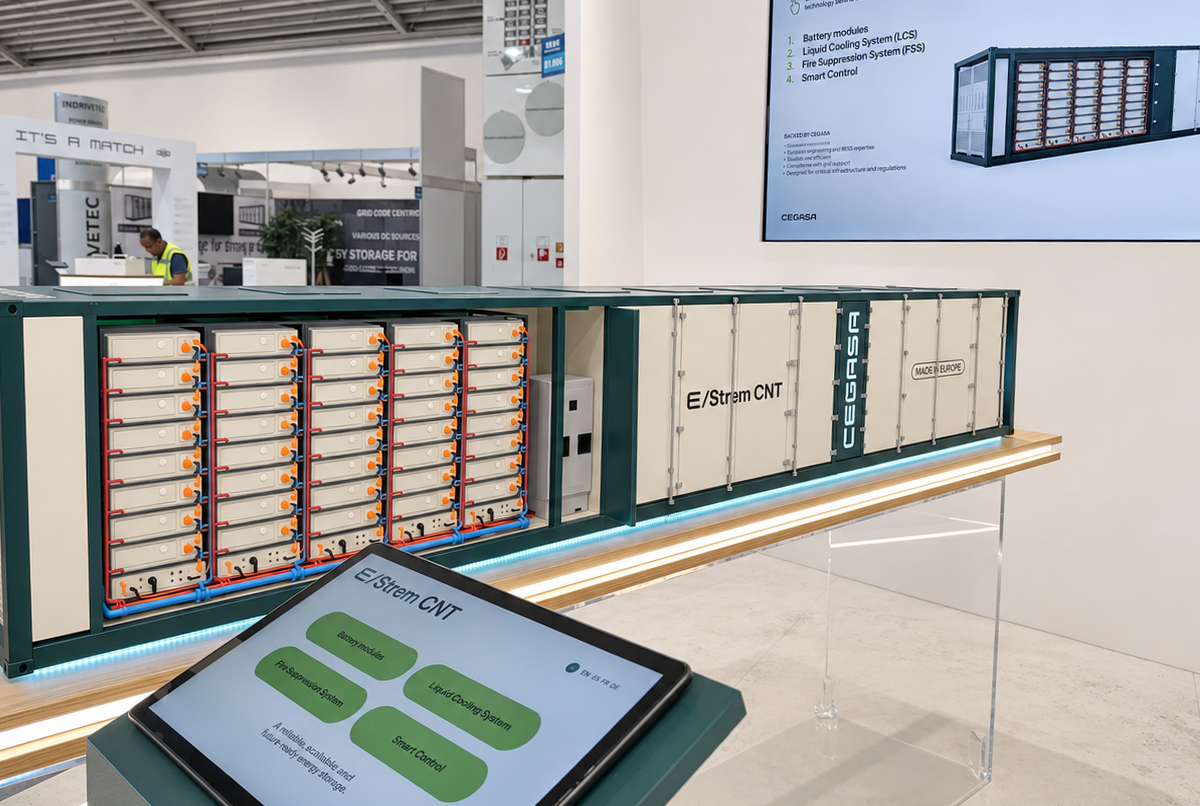
The lighting installed on the model allowed us to represent the battery charging effect using synchronized bursts of light. We placed this effect behind the racks so the movement would be visible without obscuring the interior. The light was meant to help explain the process and leave all the components visible.
We also added lighting under the model to highlight its presence above the furniture and give it a visual finish that complemented the stand design.
Videos, at the fingertips of a touchscreen
The setup was completed with a video presentation system controlled by a touchscreen. We installed it independently, integrated into the stand's furniture, to keep the surface of the model clear.
Its function was to expand the information through audiovisual content, while the lighting operated autonomously. This allowed the Cegasa team to accompany an explanation of the model with the video they needed at any given moment, from a separate control point.
Every project needs a way of telling its story
Building this model of an industrial energy storage system required us to combine workshop decisions with presentation needs. We had to decide what to show, how to build it, and how to accompany the explanation. We apologize if we are sometimes repetitive with specific phrases, but today's indexing algorithms force us to.
That is the starting point we propose for all projects: Get to know the team and understand what the person who will be using the model needs to say. Without having clearly defined this, there's no point in starting to manufacture it.
What should be defined before commissioning an industrial model?
If you're preparing a similar project, in addition to the equipment plans, it's advisable to share the design of the environment where it will be displayed. In the work for Cegasa, this information influenced the finishes and the installation method.
It is also helpful to decide which components should remain visible and what information will be explained with light or other means. Defining these issues from the beginning helps to specify the task. and allows for planning the manufacturing process taking into account how the model will be used later.

Did you enjoy this article?
Want to see other similar posts?

