
Transport of professional models: packing, assembly and safe delivery

The protection of a model begins before it is moved.
A professional model kit can consist of hundreds of delicate parts, different materials, electronic components, and meticulously crafted finishes. Therefore, its delivery should not be considered a separate step from the manufacturing process. The safety of the model is decided long before loading it into the vehicle.
Packaging, route, loading system, and assembly must be planned according to the dimensions, weight, fragility, and final destination of the model. Proper transport of professional models reduces risks and ensures the project arrives ready to fulfill its purpose, whether at an exhibition, museum, trade fair, or corporate presentation.
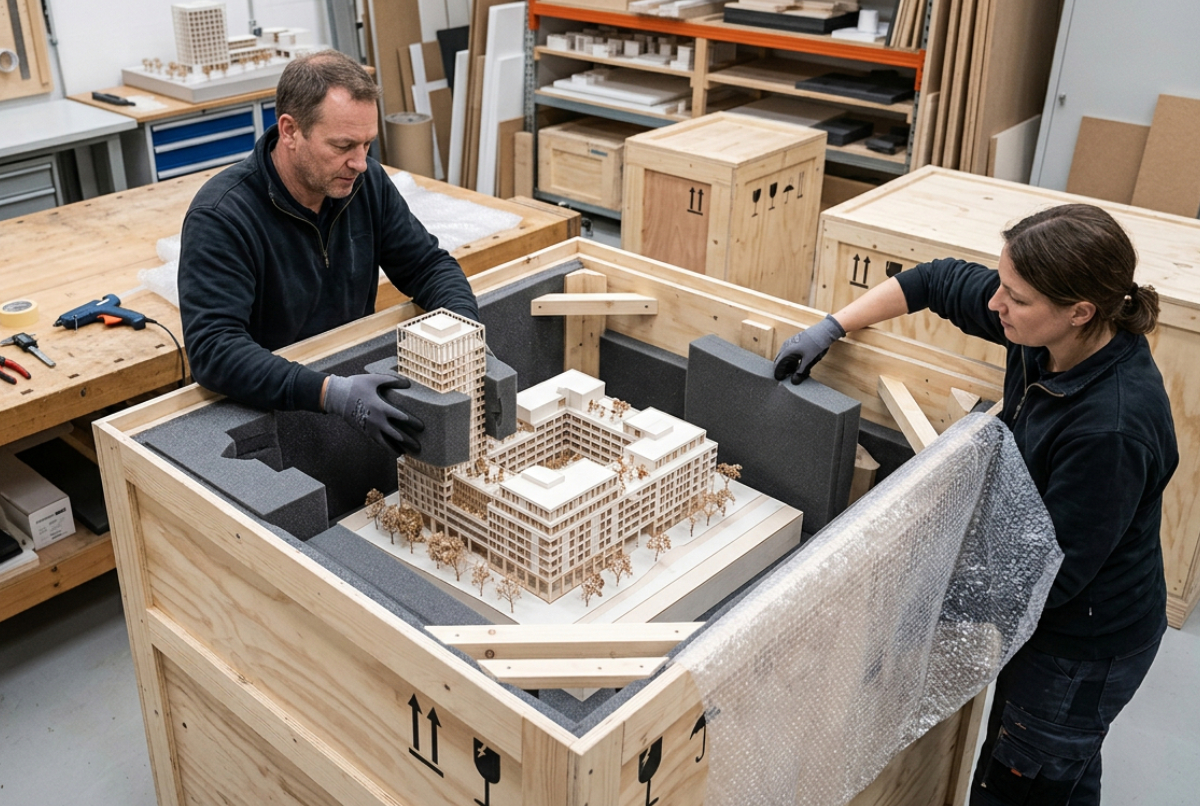
Transporting professional models: a phase that begins in the workshop
Protection is defined from the design phase
Before manufacturing the packaging, each model must be analyzed individually. Its weight, dimensions, materials, center of gravity, and most delicate elements determine how it should be handled and transported. It is also advisable to identify protruding parts, moving components, lighting systems, and areas that should not be subjected to pressure.
In many projects, these issues even influence decisions made during manufacturing, such as dividing the model into modules, the size of the base, or incorporating anchor points. Planning logistics from the start avoids last-minute changes and reduces risks during delivery.
In addition, study in advance the dimensions of doors, elevators, corridors and loading areas It allows you to verify that the model will be able to reach its final location without difficulty.
The route and the fragile elements require specific planning
The lightweight facades, miniature vegetation, railings, roofs, figures, and electronic systems require special attention before relocation. Some pieces can be immobilized, while others must be temporarily disassembled to prevent damage. This decision must be made without compromising the finishes or complicating subsequent assembly.
Transporting professional scale models also requires considering the distance, journey time, road type, potential transfers, and the conditions at the delivery location. A local shipment presents different needs than an installation at an international trade fair. Each vehicle change and each additional handling increases the model's exposure to potential incidents.
Therefore, knowing the complete route allows for adapting the packaging, coordinating the staff, and maintaining greater control throughout the entire process.
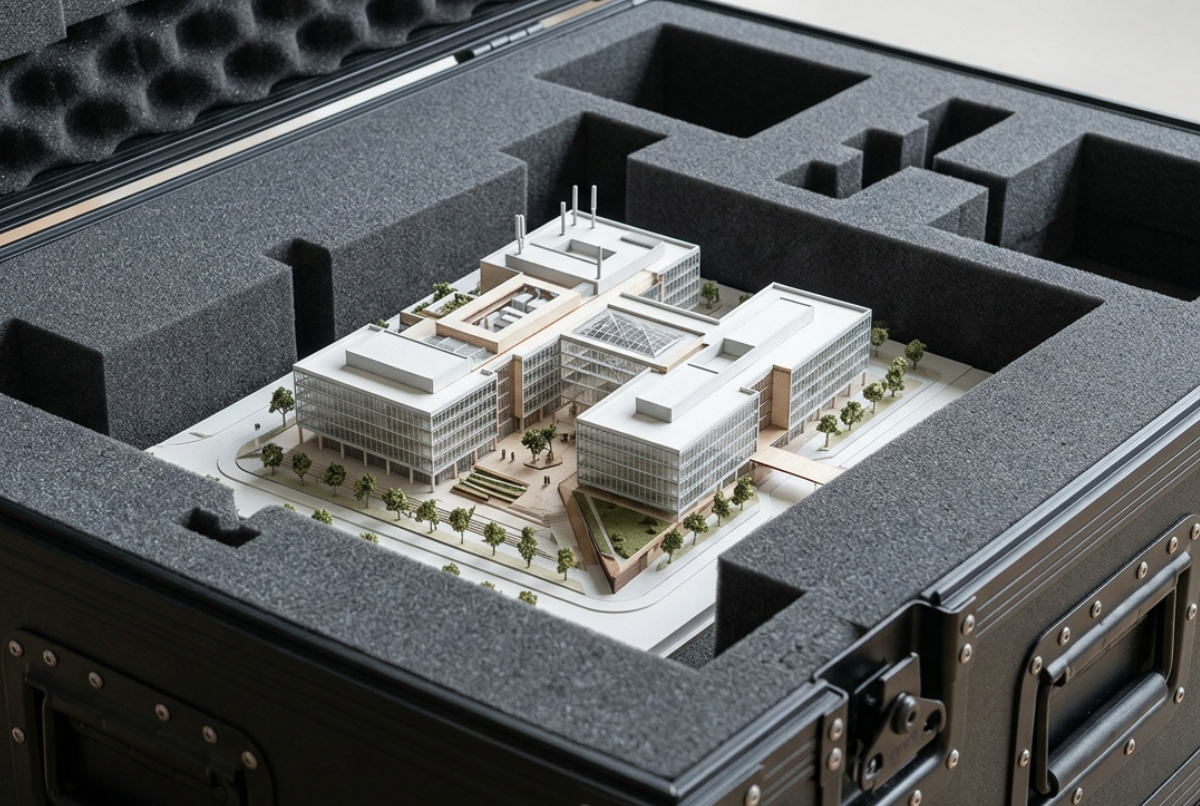
Custom technical packaging to protect each item
The box should fit the model, not the other way around.
The packaging should be designed after studying the geometry, weight, and support points of the model. A generic box can protect against dust or minor scratches, but it doesn't always prevent shifting, vibrations, or impacts during transit. Therefore, it's common to manufacture custom-made structures with internal supports, foam, dividers, and fastening systems to keep the model stable.
Good packaging controls the movement of the model without putting pressure on its most delicate areas. It should also facilitate loading and unpacking, allowing staff to access the piece in an orderly and safe manner.
The protection must cover shocks, vibrations, and environmental changes.
During transport, the model may be exposed to sudden braking, road irregularities, changes in position, or unexpected handling. The packaging must cushion these movements and prevent the internal components from colliding with each other.
However, it is also important to consider factors such as dust, humidity, and temperature. Certain plastics, adhesives, and delicate parts can be affected if they remain in unsuitable conditions for extended periods. For this reason, The protection must be planned taking into account the duration of the journey, the means of transport and the environment in which the box will remain.
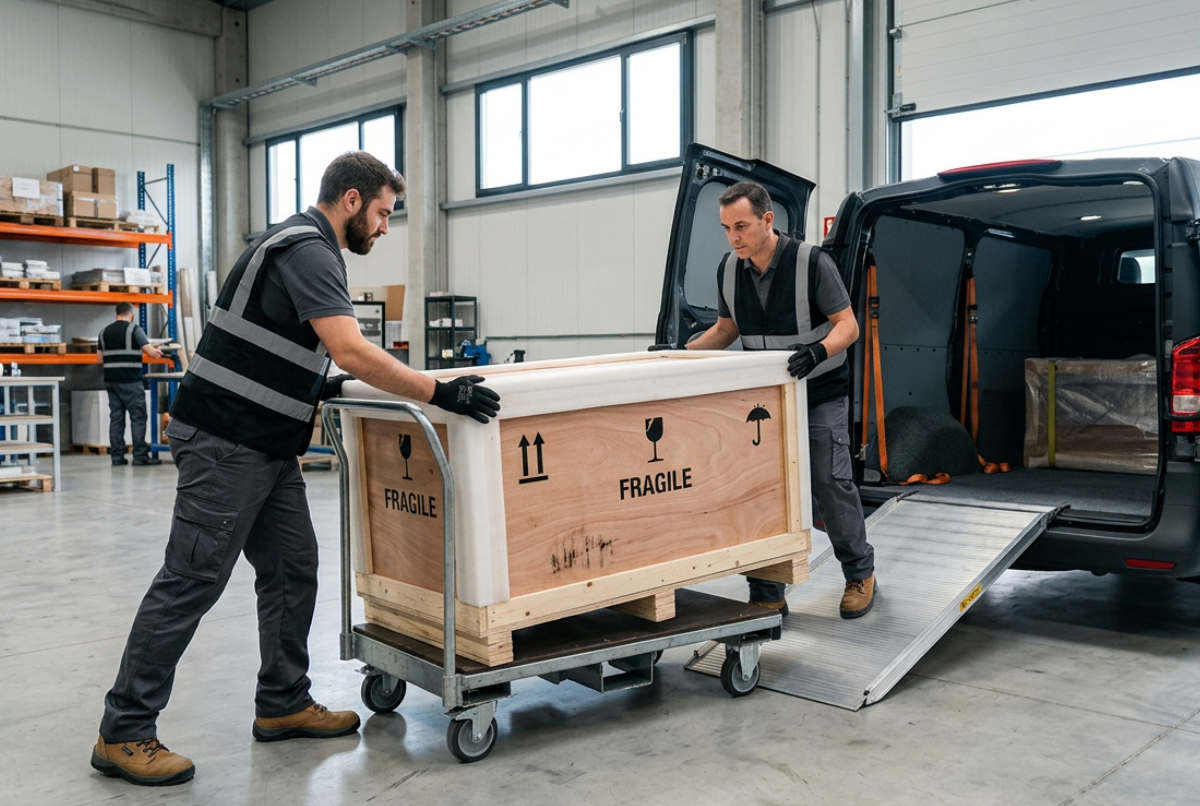
Transport of professional scale models carried out by qualified personnel
Packaging cannot prevent all risks
Even if the model is protected against bumps, vibrations or falls, there are always risks when its handling is not carried out by qualified personnel. Sturdy packaging cannot compensate for poor handling during transport. For example, if the carrier leaves the box exposed to the sun, the temperature inside can rise considerably. Depending on the materials used, this heat can cause warping, affect the adhesives, or alter some of the finishes.
ETransporting professional models requires understanding these limitations and maintaining the piece in suitable condition from collection to delivery.
International shipments require planning and adequate coverage
It is always recommended that loading, transport, and unloading be carried out by professionals experienced in handling delicate items. However, for international shipments, it can be difficult to maintain the same team throughout the entire journey. The model may pass through different vehicles, warehouses, customs, or partner companies.
In these situations, it is advisable to request clear handling instructions, document the condition of the item, and take out insurance with the transport company. The policy must cover the integrity of the model for its full value, not just the cost of shipping.
It is also advisable to check what damages are covered and what the procedure is for reporting an incident.
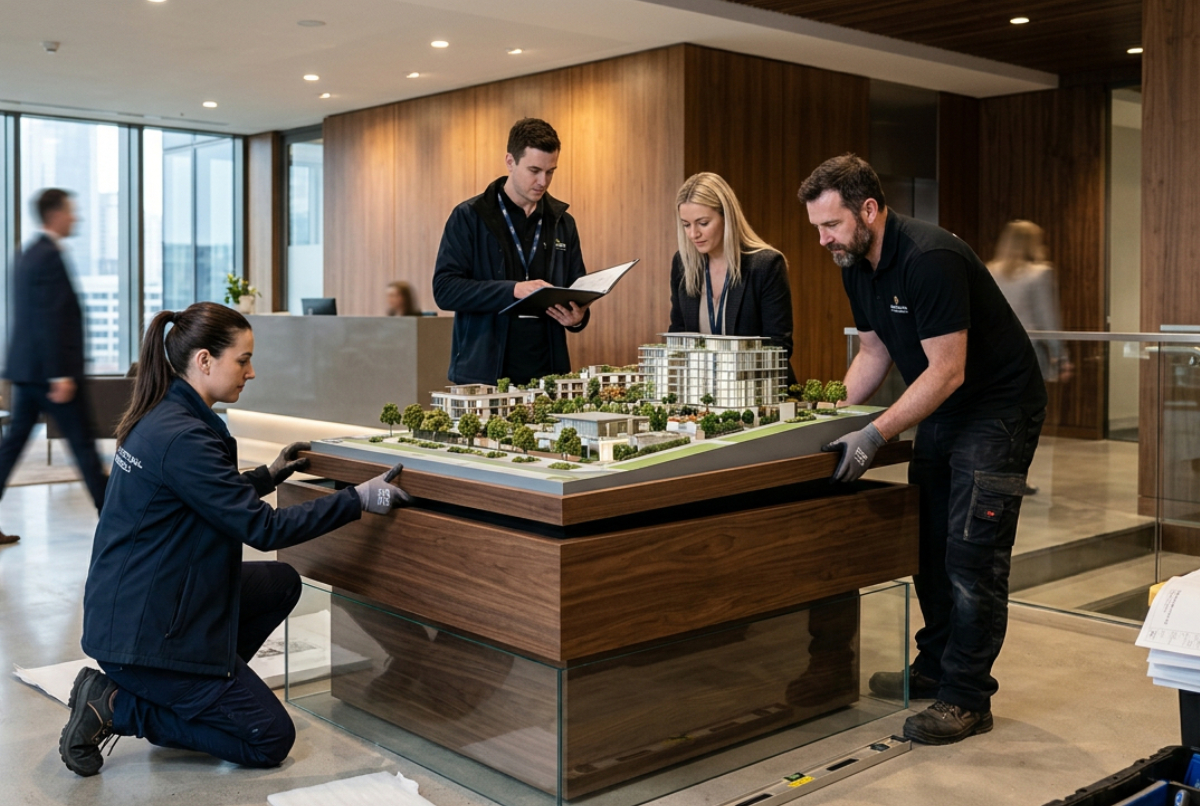
On-site assembly: an essential part of the delivery
The unpacking must follow a planned order.
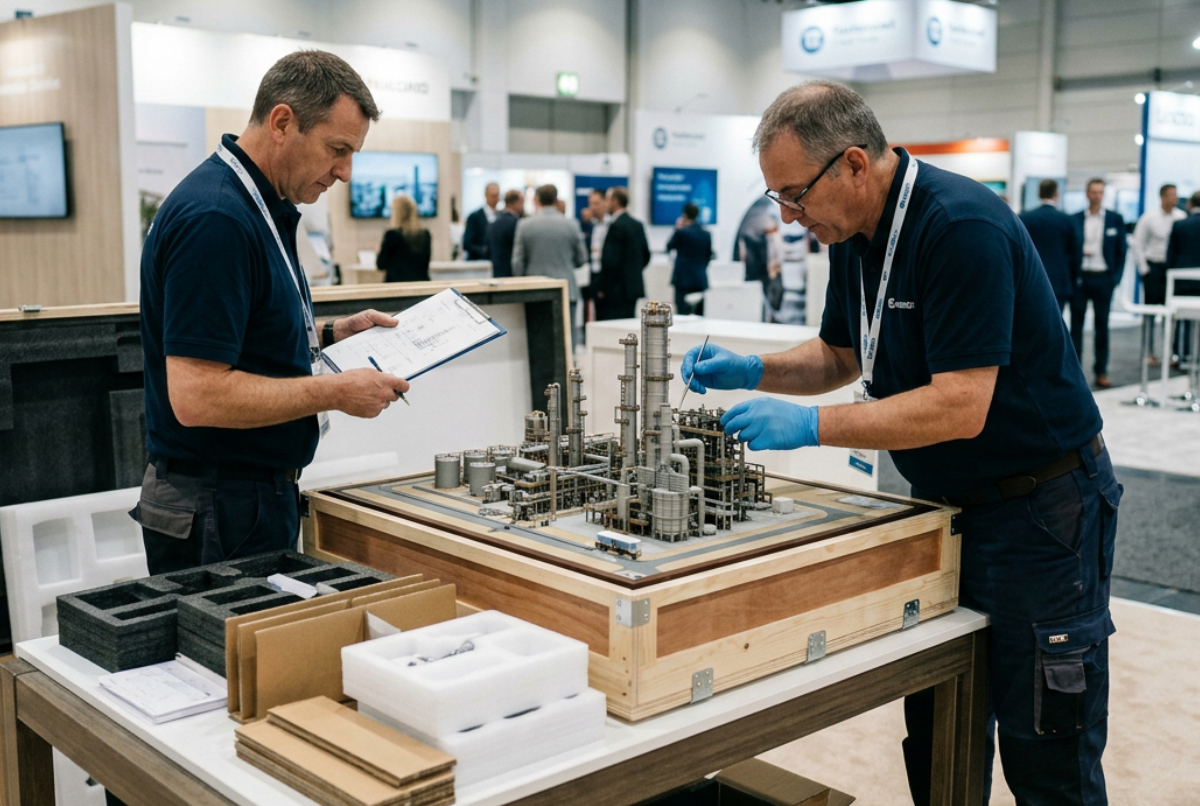
The case should be opened in a clear area with ample space to work. Removing all supports at once is not recommended, as some components may rely on them for stability. The team should know which side to open first, the location of the gripping points, and which components require special handling.
An orderly unpacking reduces the risk of damaging the model in the final minutes of the project. It also allows the packaging to be properly preserved when it needs to be used in future transfers.
The installation concludes with a complete inspection.
Once unpacked, the model should be placed on its base, display case, or final surface. For projects divided into modules, it is necessary to assemble the different parts, check the joints, and ensure the base is properly leveled.
Lighting systems, mechanisms, screens or interactive elements that are part of the set must also be connected. After assembly, it is advisable to clean the surface and perform a visual inspection. This final check allows us to verify that the model is stable, complete, and ready for presentation.
Checks for a safe and trouble-free delivery
A pre-trip check prevents problems during the journey.
Before the model leaves the workshop, it is advisable to photograph its condition and check that all its components are properly secured. The box should be labeled with instructions indicating its position, fragility, opening points, and gripping areas. It is also necessary to confirm the vehicle's dimensions, the route, access to the building, and the availability of the personnel responsible for unloading.
Each check performed before departure reduces the possibility of improvising at the destination. In the transport of professional models, small logistical details can determine the outcome of the entire delivery.
The project ends when the model is installed
Delivery doesn't end when the box is unloaded from the vehicle. It's necessary to check the condition of the packaging, open it following the instructions, and verify that there is no visible damage. After assembly, the stability, connections, finish, and functionality of the electrical or interactive components should be checked. When an external transport company is involved, it's advisable to immediately document any issues.
The model can be considered delivered when it is installed, checked and ready to fulfill its function. Proper coordination between manufacturing, packaging, transport and assembly allows for the protection of the work done throughout the project.

Did you enjoy this article?
Want to see other similar posts?

