
Video mapping on interactive models: uses, challenges and costs

Francisco Piqueras
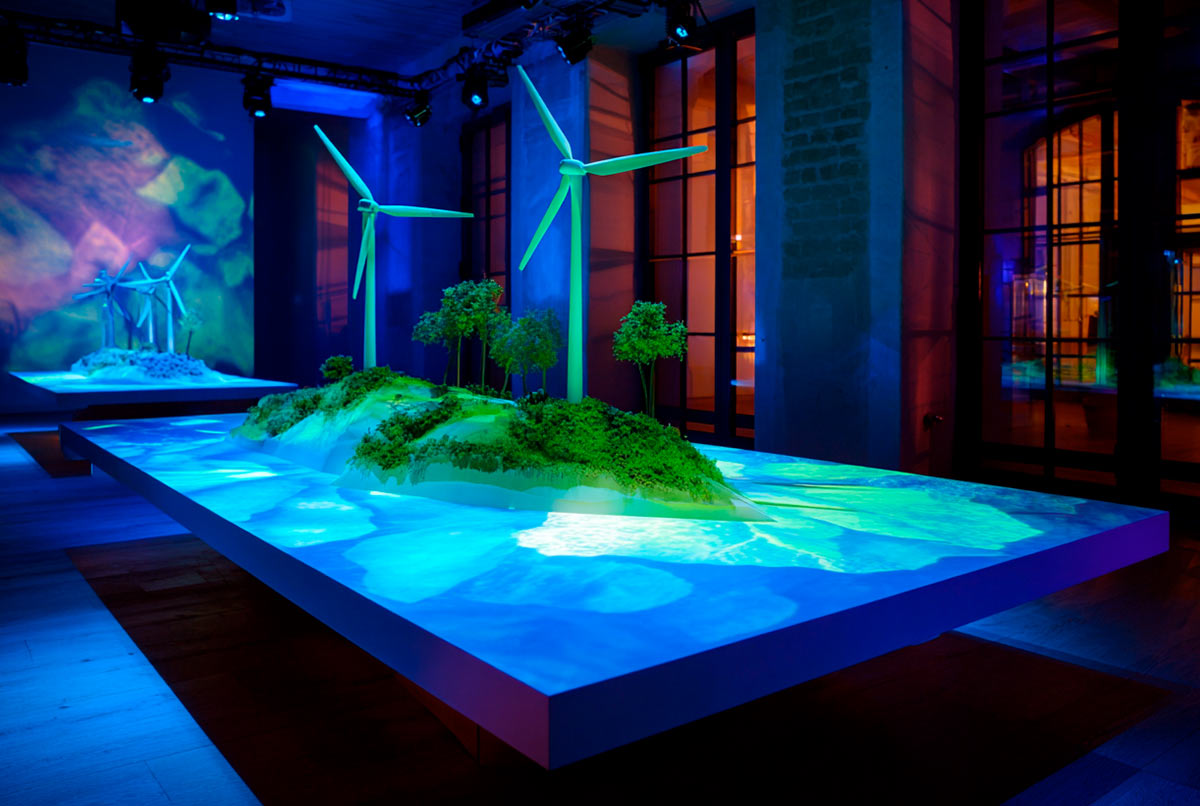
He video mapping onto interactive models It is a technique that projects animated images onto physical models, synchronizing the visual content with every detail of the model.
Beyond its visual appeal, this technology It provides educational and communicative value. It is capable of showing construction phases, simulating scenarios or illustrating complex processes, making the viewer better understand what they observe.
A technique on the rise in museums and exhibition spaces
Increasingly used in museums, scientific exhibitions and architectural presentations, this solution transforms the model into an interactive and dynamic medium. It captures attention, sparks curiosity, and transforms the visit into a complete sensory experience., which blends the physical with the digital in a surprising way.

Key applications and uses of video mapping on interactive models
He video mapping onto interactive models It has evolved beyond the cultural world to become a cross-cutting solution, applicable in very diverse sectors.
Each application has its own particularities, but they all share a common goal: Connect the audience with the content in an intuitive, sensory, and meaningful way..
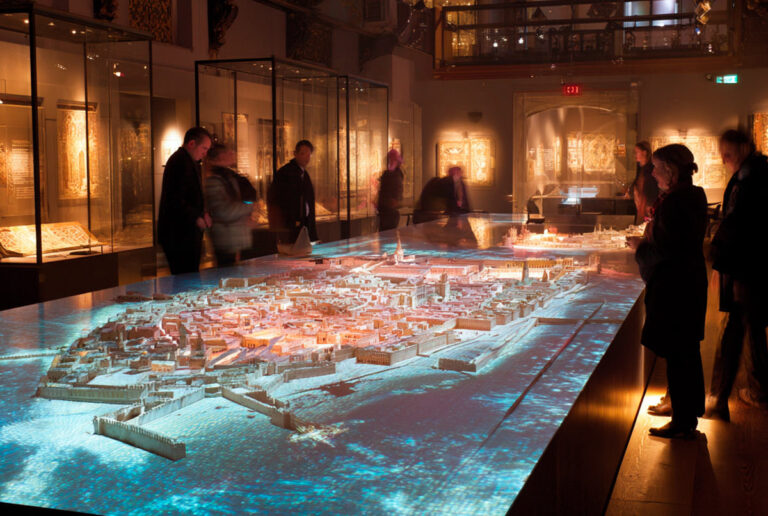
Museums and cultural spaces
The use of video mapping in museums and interpretation centers expands the informational value of traditional models. By animating scenes, contextualizing pieces, or representing transformations, this technique captures the visitor's attention and each model becomes a visual story. It is especially useful in fields such as archaeology, urban history, or science, where it can represent complex processes in a pedagogical and accessible way.
Besides, It offers an alternative to conventional graphic media, reducing the need for additional placards or screens. The result is a cleaner, more integrated, and more immersive presentation.
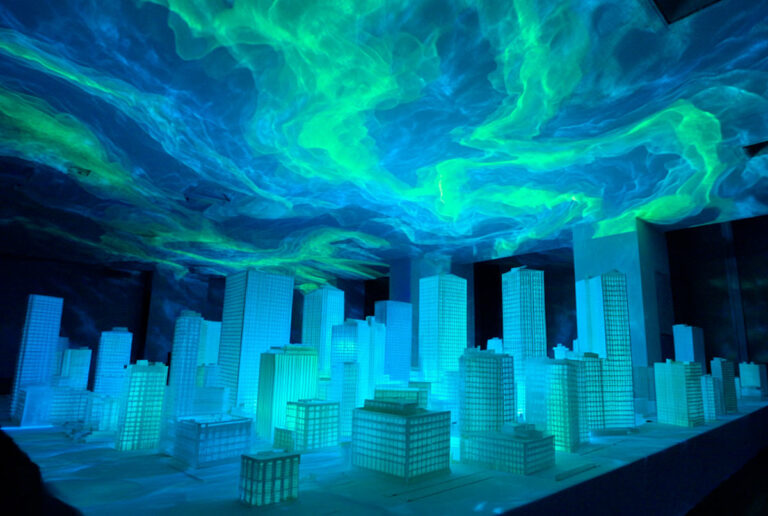
Architecture, urban planning and events: an expanding resource
In the field of architecture and urban planning, this technique offers an effective way to communicate design proposals, study the impact of interventions, and present projects in competitions or public exhibitions.
It is also being successfully incorporated into trade fairs and corporate events, where The models illuminated with video mapping generate an immediate effect of awe., capturing the public's attention and differentiating brands with an innovative staging.

Industry, technology and innovation: communication of processes and prototypes
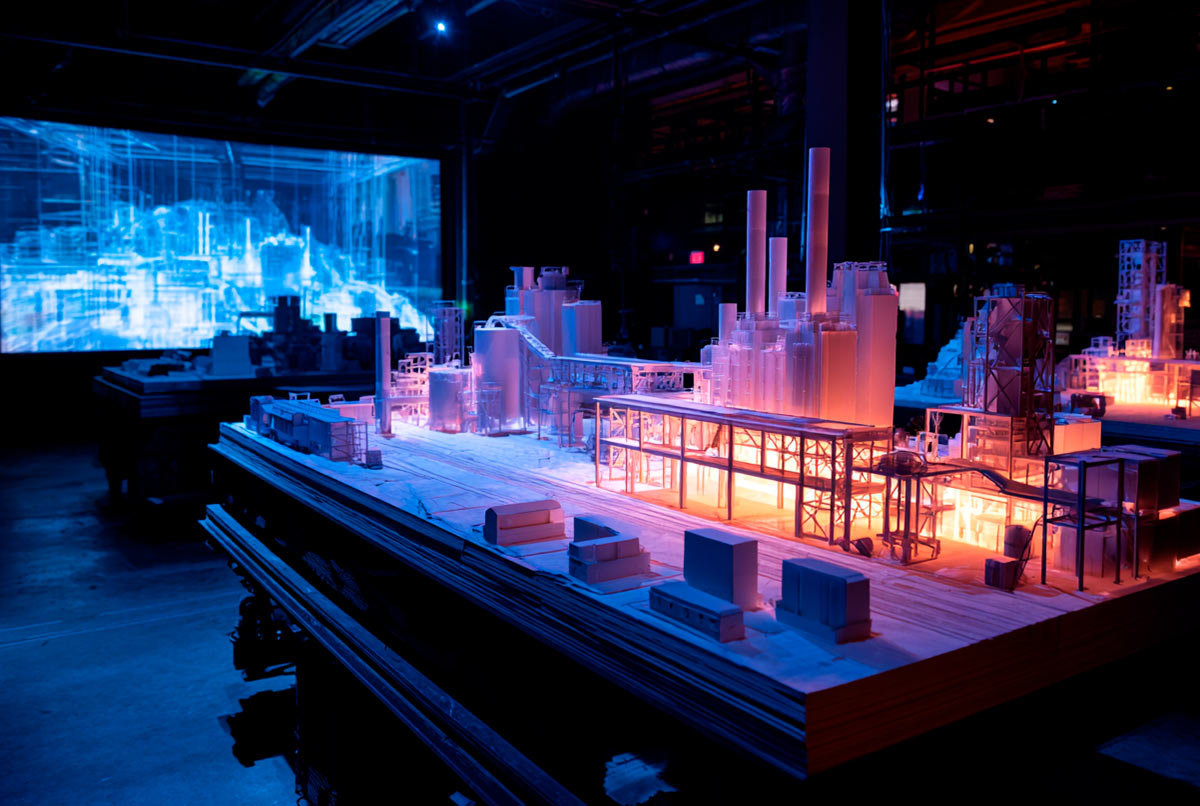
In industrial, technological and R&D environments, video mapping on models is used to show manufacturing processes, logistics flows, automated systems or assembly schemes. This resource allows you to illustrate the operation of a product or system without the need for functional models or real installations.. It is ideal for internal presentations, staff training, or demonstrations to investors and strategic partners.
It is also used in innovation labs and technology centers to prototype ideas, simulate scenarios, or visually represent complex data., facilitating the rapid understanding of advanced proposals in sectors such as engineering, robotics, or energy.
Benefits of video mapping on interactive models
One of the main benefits of video mapping on interactive models is its ability to enhance visual communication. By projecting animated content onto a physical model, a clear and immersive representation of complex ideas is achieved, ideal for explaining technical processes., temporal transformations or spatial phenomena.
This not only makes understanding easier, but also It significantly improves retention. of information in the public.
Aesthetics, emotion, and connection with the audience
Furthermore, this technique offers high aesthetic and emotional value. The projections can be adapted to different audiences and contexts, from educational to promotional, creating immersive narratives that connect with viewers.
This solution transforms each model into a memorable experience, leaving a lasting impression and amplifying the impact of the message..
Lighting, key to the visual experience
The lighting environment affects visibility
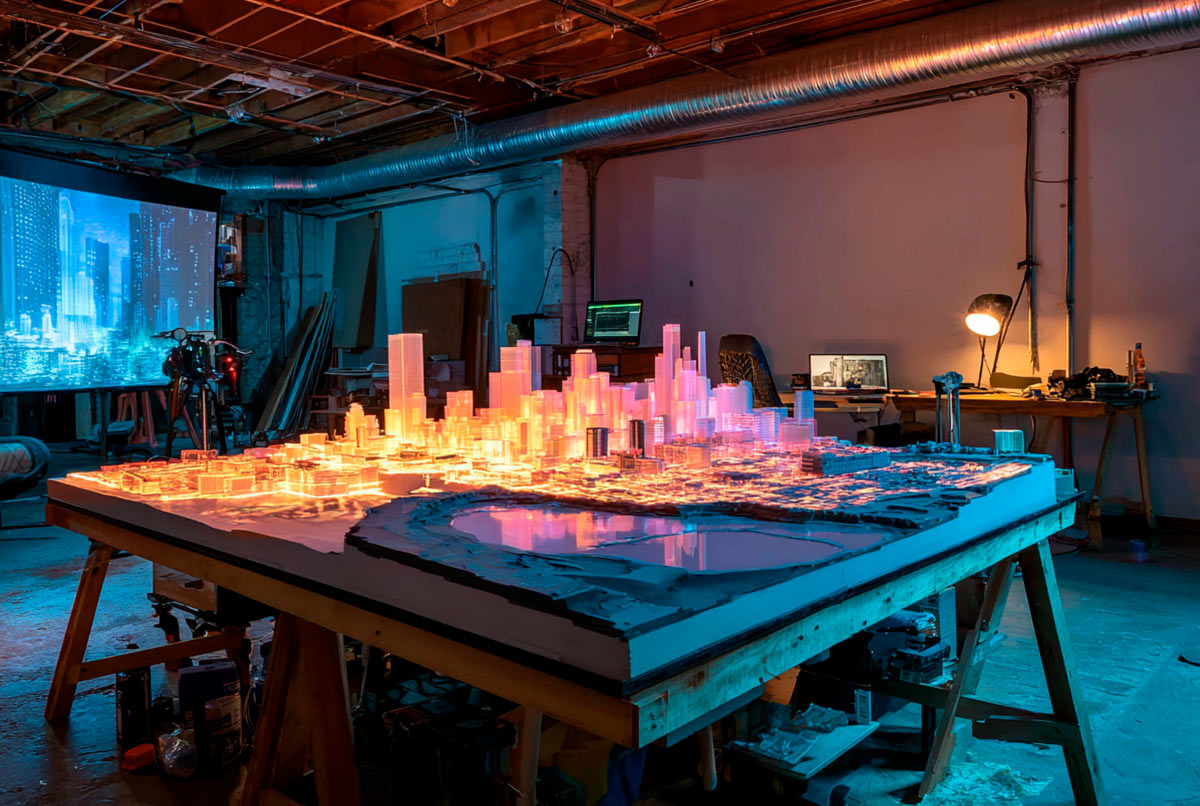
In the installations with video mapping on interactive models, the ambient light control It is not just a technical detail, but an indispensable condition for the success of the project. The projection needs darkness or, at least, a controlled environment so that the colors, shapes, and visual effects are perceived clearly.
A brightly lit room can blur the image, reduce contrast, and negate the impact of the projected content.
Without darkness, it's best to opt for another solution
When it's not possible to guarantee an environment with adequate lighting—for example, in open spaces, brightly lit trade fairs, or rooms without lighting control—video mapping may not be the best option. In those cases, it's preferable to explore other alternatives. other interactive technologies, such as touchscreens, augmented reality, or integrated digital modules.
Forcing a projection in an unsuitable environment can be costly and ineffective, completely diluting the experience..

Challenges and opportunities of video mapping on interactive models
Technical precision in content alignment
One of the biggest challenges of video mapping on interactive models is achieving perfect alignment between the digital projection and the physical surface of the model. Every millimeter counts: a slight deviation can cause the content to lose its meaning or the visual effect to become distorted.
This accuracy depends on both the calibration of the projector and the previous 3D design and the quality of the mapping software used.
Real-time interactivity and scalability
Another major challenge is maintaining fluidity in interactive environments. When content responds to user movement or sensors, synchronization must be instantaneous. Furthermore, large-scale projects—such as complex urban models or installations with multiple projectors—require rigorous planning for ensure visual consistency.
This fundamental factor implies an additional investment in programming, technical testing, and constant adjustments to guarantee a flawless experience..

Costs and estimates for video mapping projects on interactive models
Factors that influence the budget
The cost of a video mapping project on interactive models can vary greatly depending on the size of the model, the complexity of the content and, above all, the type of projector required. The more light the environment needs —for example, in partially lit spaces—, the greater the projector's light output must be, which significantly increases the cost of the equipment. This is one of the elements that has the greatest impact on the overall project budget.
In addition, other aspects such as the degree of interactivity, the type of software, and whether or not a sensor system or custom audiovisual development is required. Every technical decision directly affects both the budget and the final result.
Investment ranges and practical considerations
Although each installation is unique, approximate references can be established: the most basic projects can start at around €5,000, while larger solutions —with several projectors, real-time sensors and advanced content— can exceed €30,000.
Having technical advice from the design phase is key to optimizing the investment and avoiding unexpected costs.
Conclusion and future perspectives of video mapping on interactive models
A powerful solution that transforms the way we communicate
Video mapping on interactive models It has ceased to be a novelty and has become a well-established tool in museums, architecture, and events. Its ability to combine audiovisual content with physical models allows it not only to capture attention but also to explain complex ideas in a clear, engaging, and memorable way.
When it is applied In a suitable environment, with planning and precise technical execution, the results are impressive.
New technologies, new possibilities
The future of this technique points towards increasingly seamless integration with technologies such as artificial intelligence, the augmented reality or the touch sensors. These innovations will allow for the creation of even more dynamic, adaptive, and participatory experiences.
At IA Manufacturing we are ready to explore these possibilities with you, developing custom interactive mockups that connect with your audience visually and emotionally..

Did you enjoy this article?
Want to see other similar posts?

