
Is it possible to objectively compare model budgets?

Comparing model budgets requires first matching the scope
When several companies submit bids for the same model, the final price can be misleading if each supplier has interpreted the project differently. A cheaper offer may be leaving out work, benefits, or responsibilities that another offer does include.
Before assessing prices, it is advisable to check that the dimensions, scale, level of detail, finishes, materials, lighting, interactivity, programming and associated services match. We also need to check what happens outside the workshop: Documentation, modifications, packaging, transport, installation, commissioning, and maintenance. Only after equating these concepts does it make sense to compare model budgets.
Not all audiences need to see the same thing
Defining your target audience isn't about creating a marketing profile full of data that contributes little to the project. The important thing is to understand what the recipient already knows, what they need to understand, and which aspects of the proposal are relevant to them.
This information helps to determine what should be highlighted in the model and what can remain in the background. Thinking about it from the beginning allows for better guidance of subsequent decisions regarding representation, detail, finishes, or interactive resources, avoiding the incorporation of elements that hinder the reading of the project.
1. Comparing model budgets starts with matching the scope
Two offers may describe different projects.
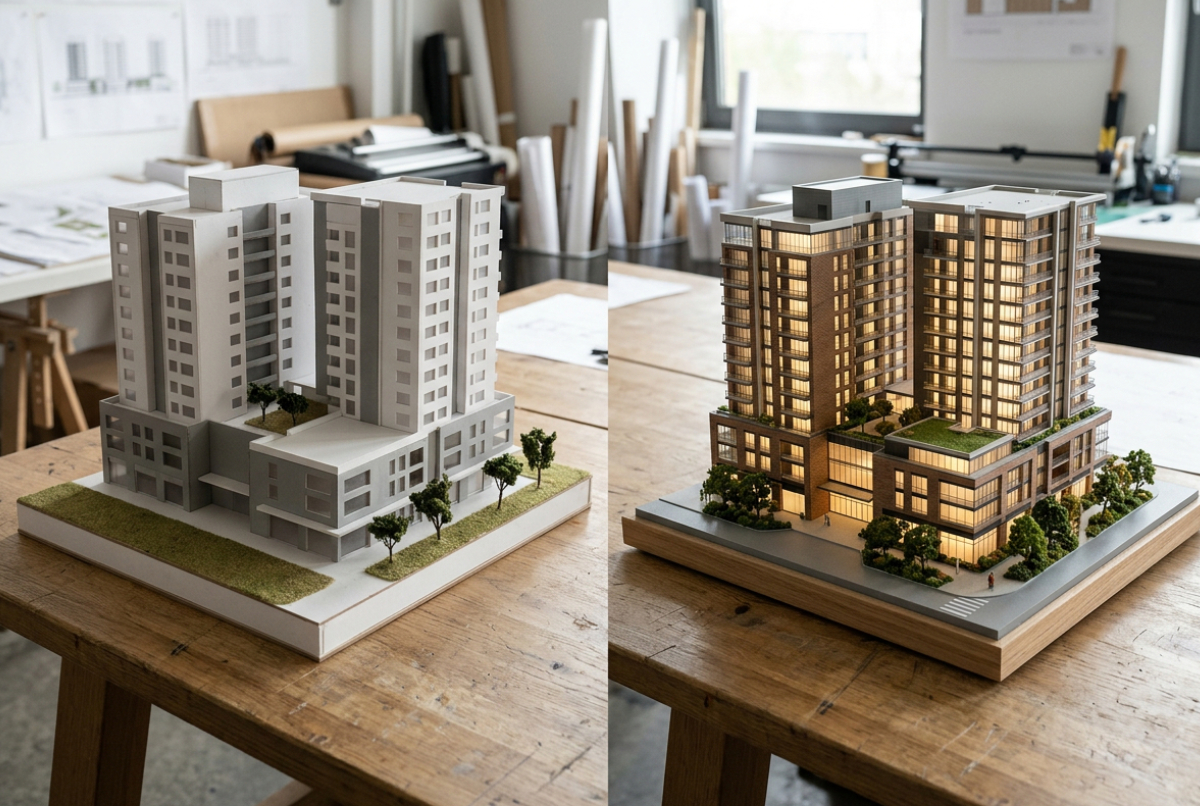
The first mistake when comparing model budgets is assuming that all suppliers have interpreted the project in the same way. An identical scale and similar dimensions do not guarantee equivalent scope.
The level of detail, materials, finishes, and technical solutions can substantially change the work required. Before assessing the total amount, it is advisable to review what product each company is actually proposing.

Dimensions and scale don't tell the whole story
A 2 x 1 meter scale model can require very different work depending on what it needs to represent. Reproducing general volumes is not the same as including installations, machinery, vegetation, furniture, signage, or small construction elements.
Scale alone does not determine the level of detail. The important thing is to know which elements will be represented and to what degree of definition. If an offer does not specify it, there is a part of the price that cannot yet be compared.
The materials should be identified
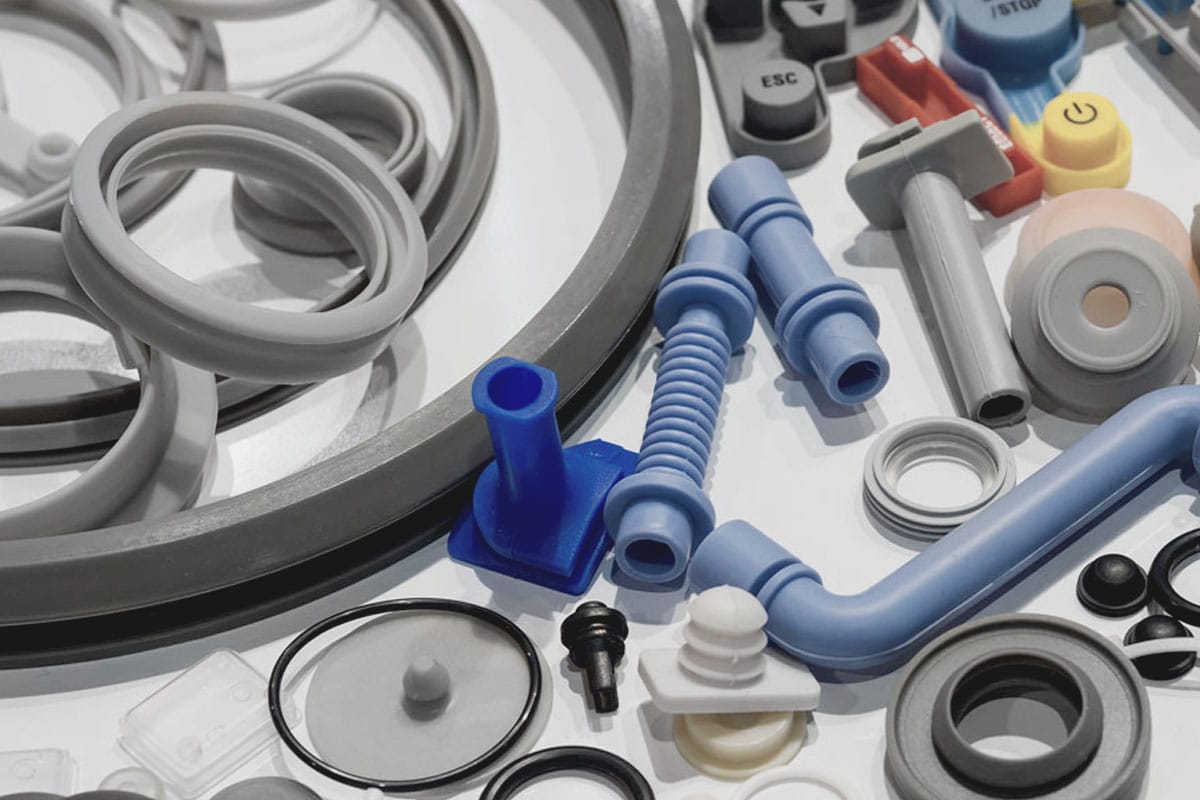
Another important difference arises when one budget details the materials while another simply describes the final result. Stating only that the model will have a certain appearance doesn't explain how it will be built or how it will perform its intended use.
It is advisable to know the materials used in the main parts, surfaces, structure or outer protection when relevant. The choice of material affects the finish, resistance, repairability, and durability of the model.

Adjectives do not define a finish
Expressions like “realistic finish,” “high quality,” “premium look,” or “great level of detail” can sound appealing in a proposal, but they are difficult to measure. Two suppliers can use the same expression for visually very different results.
At IA Manufacturing we prefer to accompany these types of descriptions with images of similar solutions whenever possible. A concrete visual reference reduces ambiguity much more than any adjective.

Visual references should also be interpreted carefully.
A reference image is useful for understanding materials, textures, level of detail, or the treatment of certain parts, but it shouldn't replace the scope description. It's advisable to clarify which characteristics of that reference will be reproduced in the new project.
This prevents a photograph from creating expectations about elements that are not included in the offer.

The first comparison should be made without looking at the total.
A practical way to review several offers is to temporarily hide the price and check if the descriptions could be swapped between suppliers without changing the expected result.
If a proposal incorporates more detail, better materials, different construction solutions, or a more demanding finish, its price should not be directly compared to that of a more basic alternative. Only when these differences are identified does it make sense to return to the final figure.

2. Interactivity and technology: it is better to compare functions, not labels
“Interactive” can mean very different things
Two budgets may include an item of “interactivity”"and are proposing very different solutions.". A push button that activates a circuit is not equivalent to a system with specific programming, sequences, or integration with screens, lighting, and movement.
To compare mock-up quotes effectively, it's helpful to ask exactly what will happen when the user interacts with it, how many elements will respond, how they will respond, and whether there's programmed logic behind it. The word "interactive" alone doesn't tell you what level of development you're getting.
Technological support is also part of the offer
In a prototype involving electronics or programming, the comparison doesn't end when the project is delivered. It's important to know if the supplier offers remote support, if they can diagnose issues, and if the main components are accessible or replaceable. A more comprehensive technological solution may justify a higher price if it reduces risks during the lifespan of the model.
It's also important to clarify whether the sequences, timings, or behaviors can be modified later, and who will be authorized to do so. A vague description of the system leaves too many questions unanswered to properly evaluate the offer.

3. Documentation and reviews: the work that can remain hidden
A complete 3D model is almost never ready for manufacturing
In industrial or engineering projects, it's common to receive very complete 3D models, but that doesn't mean they can be used directly. Often, they contain components that won't be represented due to scale or level of detail and must be removed before starting. Preparing and cleaning files can become an important part of the job.
Therefore, it's important to clarify whether the budget includes this adaptation and what documentation the supplier expects to receive. At small scales, a simplified geometry can be even more useful than an extremely complex technical model.
Each modification may involve more work than it seems
Changes made during manufacturing must also be clearly defined. Replacing a file doesn't always mean modifying only one part: if the customer resubmits a complete model, it may be necessary to review numerous components to locate the differences. A seemingly small modification can require new hours of analysis, redesign, and testing.
When comparing offers, it's advisable to ask how revisions are managed, what type of changes are included, and at what point an update becomes an expansion of scope with an impact on time and budget.

4. Packaging, transport and installation: items that should be closed early
The delivery doesn't end when the model leaves the workshop
Packaging, transport, and installation may be included, excluded, or defined too generically. It's important to know if a transport crate is provided, what protection the model will have, who is responsible for unloading, and if assembly is included.
An offer apparently cheaper It may leave out essential tasks for the model to arrive in good condition and be operational. It is also advisable to clarify insurance, travel, auxiliary means and any costs associated with an initial installation carried out by the manufacturer.
Access to space can become a real problem
Before assembly, it's essential to check routes, doors, elevators, passage dimensions, schedules, and any necessary special permits. A model can be perfectly constructed and still encounter serious difficulties upon arrival. The customer should confirm that access and installation conditions are resolved before delivery.
In openings, trade fairs or installations with fixed dates, having the manufacturing team present at the initial installation also helps to resolve unforeseen issues without compromising the project's launch.

5. The final price should not be the only criterion
A small difference may be irrelevant over years of use
A professional scale model can be used for a long time in exhibitions, interpretation centers, business presentations, or corporate installations. Therefore, Saving a few hundred euros at the beginning may not amount to much compared to the entire lifespan of the project.. If a higher price includes better materials, a more robust technological solution, a better installation, or more effective after-sales service, the price difference can be more than offset.
The point is not to choose the most expensive option, but to understand what you actually get in return.
It is also worth comparing risk, support, and durability.
Before awarding a contract, it is worth asking what will happen if an incident occurs, if a schedule needs to be modified, or if a part needs repair. A well-defined offer reduces uncertainty and facilitates the subsequent management of the model.
To objectively compare model-making budgets, price must be considered alongside scope, expected quality, durability, and support offered. In projects intended to last for years, a small initial price difference may be less important than having a more reliable product and a supplier who can provide ongoing support.

Did you enjoy this article?
Want to see other similar posts?

