
Conceptual Model Design in Futuristic Architecture

Francisco Piqueras
In this article, we delve into the vibrant universe of conceptual models in futuristic architecture, a field where creativity and technology intertwine to forge previously unimaginable realities.
We will explore how architects and designers use these models not only as representational tools, but as canvases to express the boldest visions of the future.
From the conception of revolutionary designs to the meticulous selection of novel materials and cutting-edge modeling techniques, every aspect of this process is a key piece in the construction of urban futures. Through case studies and practical examples, We will see how these conceptual models become the soul of projects that challenge the limits of our imagination, anticipating a tomorrow where architecture is synonymous with innovation and progress.

1. Conceptual design
This section reveals how futuristic visions are transformed into tangible prototypes. Here, innovation is not just an ideal, but a concrete practice, where each concept is examined and reimagined to create structures that are both functional and aesthetically revolutionary.
Conceptualization of Innovation
At the beginning of each conceptual model, the designers and architects immerse themselves in a deep conceptualization process. Topics such as the automation, sustainability, and adaptability of urban spaces.
Experimentation with new approaches to housing, work, and leisure shapes the designs. Here, creativity meets feasibility, and each idea is evaluated for its potential to enrich and transform our interactions with built environments.
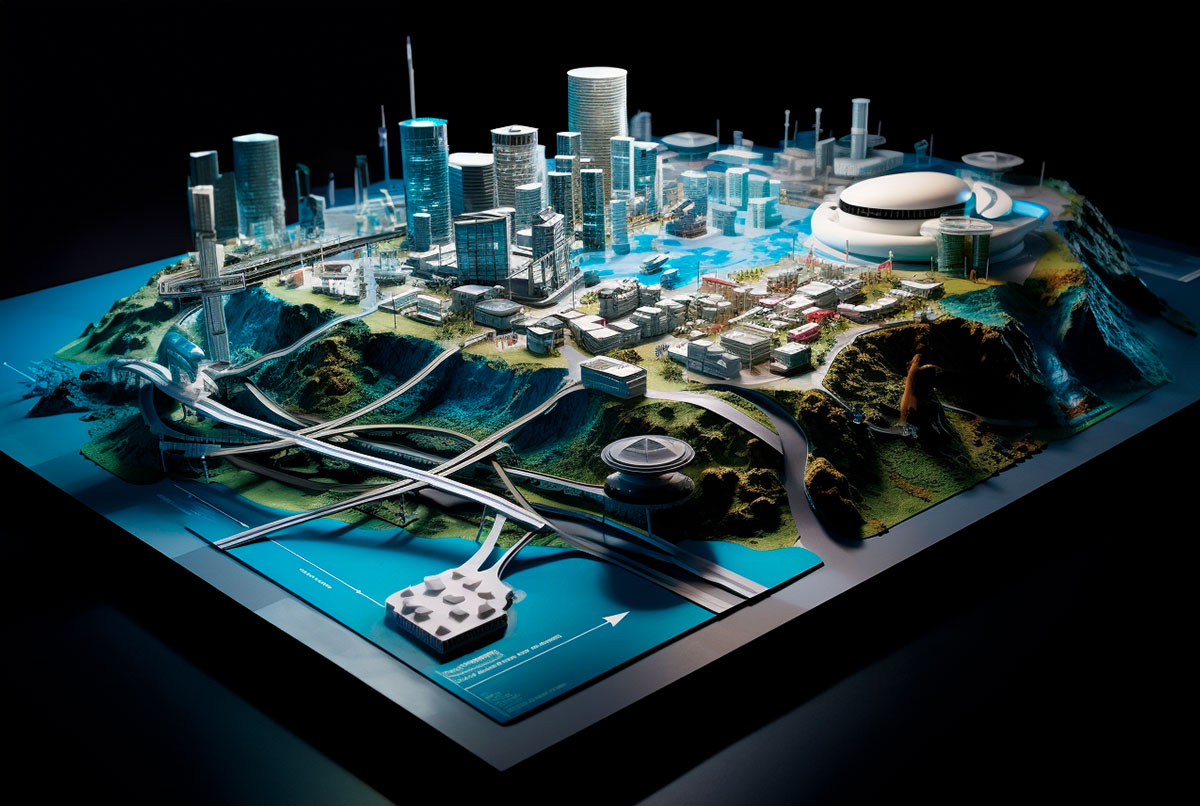
Conceptual models become the physical manifestation of these debates, bringing concepts from paper to three-dimensional reality.
From Imagination to Reality
The transition from ideas to concrete models is a fascinating journey. Conceptual models provide a unique opportunity to explore how shapes, textures, and materials interact in the real world. This process involves meticulous attention to detail., where each element is selected and placed with precision to reflect the futuristic vision.3
Architects and designers test different configurations, adjusting and readjusting, to ensure that each model not only represents an idea, but It also responds to the practical and aesthetic needs of future life. These models are a testing ground for innovation, where the boundaries of architecture are constantly expanding.
2. Selection of Materials
The choice of materials in futuristic architecture is not only a matter of aesthetics, but also of functionality and innovation. This section focuses on the materials that are defining the future of conceptual models, comparing the properties of traditional materials with futuristic ones and highlighting how these choices influence the representation and feasibility of advanced architectural designs.
Traditional vs. Futuristic Materials
Here we explore a diverse range of materials, from classics like wood and plaster to innovations such as advanced polymers and lightweight metals. Using comparative tables, we analyze the properties of each material, such as durability, weight, and sustainability.
This detailed comparison helps to understand why certain materials are better suited to representing futuristic concepts., both in terms of functionality and visual impact.
Practical Application in Conceptual Models
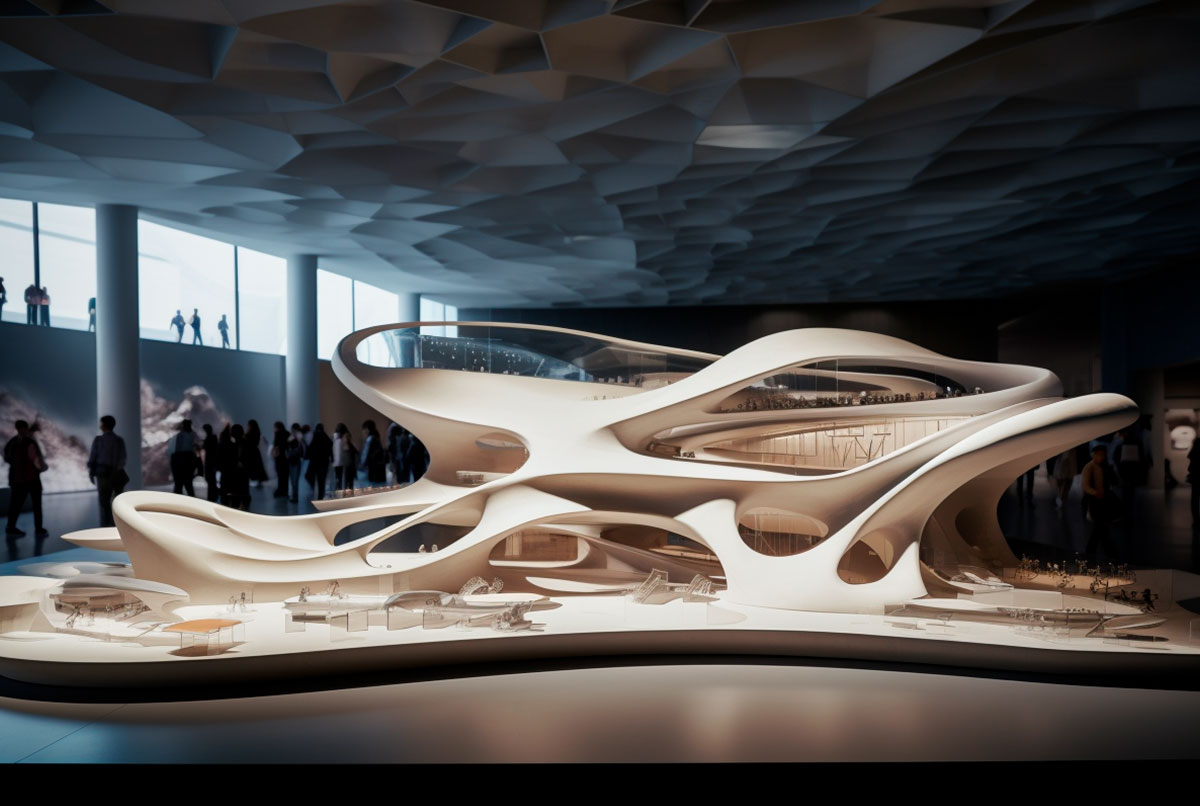
The application of these materials in conceptual models is an art in itself. In this phase, we discuss how the selected materials can influence the interpretation of a design and the viewer's experience. Certain materials can enhance the representation of cFeatures such as transparency, light reflection, or the impression of movement, crucial aspects in futuristic architecture.
3. Modeling Techniques in Conceptual Models of Futuristic Architecture
The creation of conceptual models in futuristic architecture depends not only on innovative ideas and advanced materials, but also on sophisticated modeling techniques.
This section delves into the methodologies and tools used to bring these models to life, highlighting how modern techniques are revolutionizing the way architects and designers visualize and build the future.
Tools and Resources
In the modeling of futuristic mock-ups, tools and resources play a crucial role. This phase must consider everything from computer-aided design (CAD) software to 3D printing and laser cutting., describing how each technology brings precision and detail to the models.
The team is also examining the use of augmented reality and virtual for proof of concept, allowing creators to visualize their models in simulated environments, or provide extra information to the models, which is essential to understanding its impact in real urban contexts.
Construction and Modeling Techniques
From traditional assembly methods and manual modeling to more advanced techniques such as vacuum casting or rotomolding. These techniques allow for greater precision and flexibility in the representation of complex designs and innovative structures.
Strategies for combining different materials and technologies must also be considered. interactive to achieve results that are both aesthetically impressive and structurally informative.

4. Examples and Applications in Conceptual Models of Futuristic Architecture
The best way to understand the impact and importance of conceptual models in futuristic architecture is through concrete examples and real-world applications.
This section presents a selection of outstanding case studies, analyzing how they embody the principles and techniques discussed above, and how each model has contributed to the development and visualization of innovative architectural projects.
Case Studies of Outstanding Models
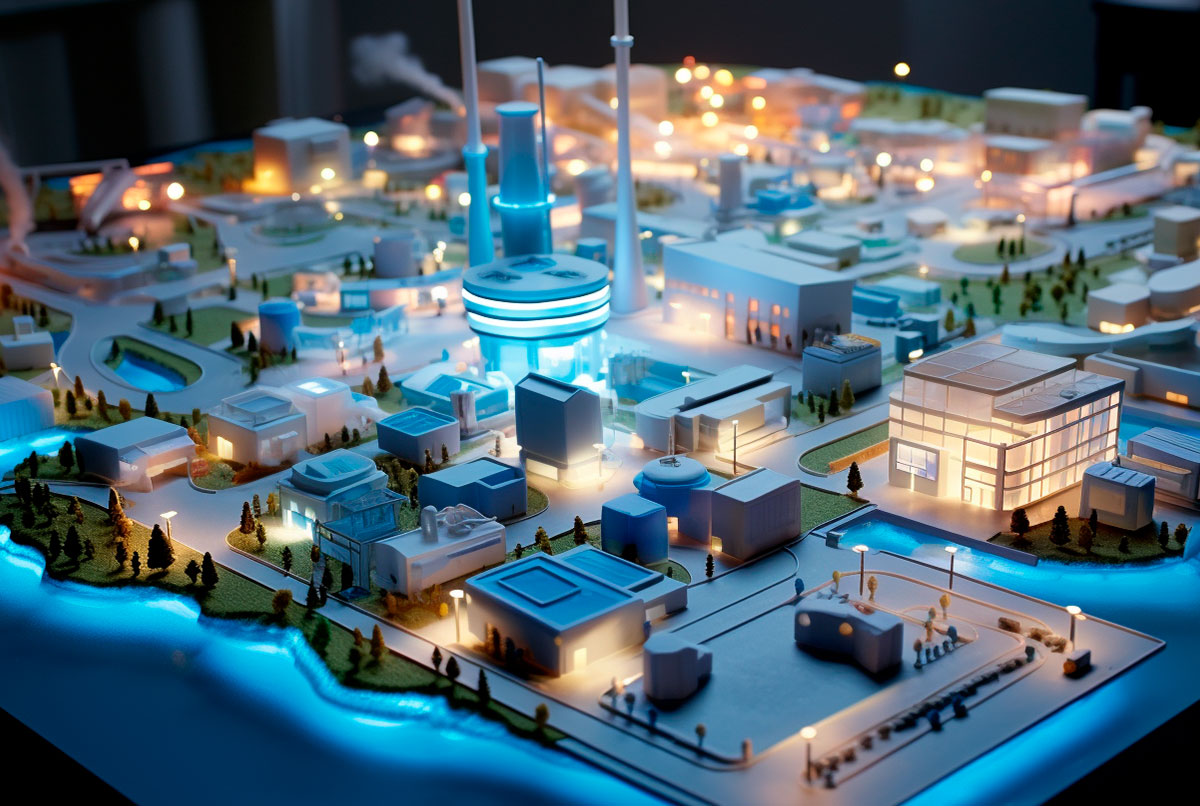
From buildings that integrate renewable energy systems to structures that defy the laws of physics with their design, each project demonstrates how Models can be a powerful tool for experimentation and the presentation of futuristic ideas.
They stand out the processes behind these creations, the challenges faced and how they were overcome, providing an in-depth view of the impact of these models on the field of futuristic architecture.
Principles Represented in the Models
Concepts such as sustainability, human interaction with space and the incorporation of technology are represented visually and structurally in the models.
Examining these principles in action offers a deeper understanding of how The models are not only physical representations, but also expressions of the philosophy and aspirations of futuristic architecture.
Conclusion
Conceptual models in futuristic architecture are not only manifestations of creativity and technique, but also powerful instruments of innovation and forecasting.
We have seen how these models serve as platforms for experimenting with bold designs, advanced materials, and cutting-edge modeling techniques.
Looking ahead, it is clear that Conceptual models will continue to be key elements in defining and understanding futuristic architecture., acting as bridges between imagination and tangible reality, and playing an essential role in shaping our cities and spaces of the future.

Did you like this model?
Want to see other interactive projects?

