
Models with interactive lighting: uses, benefits, technology and costs

Francisco Piqueras
Models with interactive lighting They combine detailed physical structures with intelligent lighting systems that respond to the environment or the user's actions.. Far from being a mere aesthetic feature, this integration transforms the model into an expressive and functional medium: it can narrate, point out, teach, and surprise. Through LED technology, sensors, or digital control, each point of light becomes an active part of the story the model aims to convey.
A tool that is expanding in multiple sectors
This type of model is being strongly incorporated into museums, technology fairs, architecture studios and industrial environments. Their ability to guide attention, explain complex processes, and generate memorable experiences makes them a highly valued option for communication and exhibition design professionals..
It's no longer just about showing an object, but about activating an experience.

Featured applications and uses of models with interactive lighting
Models with interactive lighting are becoming a versatile solution in various professional contexts, from museum displays to industry., They allow complex content to be presented intuitively, guiding the viewer through the information thanks to programmed lighting effects or user-activated sensors..
This technology adapts to multiple languages and objectives: pedagogical, commercial, technical or emotional, This explains its growth in sectors as diverse as those we see below.

Museums and cultural spaces
In museum settings, interactive lighting allows for highlighting specific areas of a model, indicating historical milestones, or accompanying narratives with synchronized light displays. This solution is especially useful in thematic exhibitions, heritage models, or interpretation centers, where The light guides the visitor and facilitates a deeper understanding of the content.. At the same time, it provides an immersive atmosphere that enhances the visual appeal of the piece.
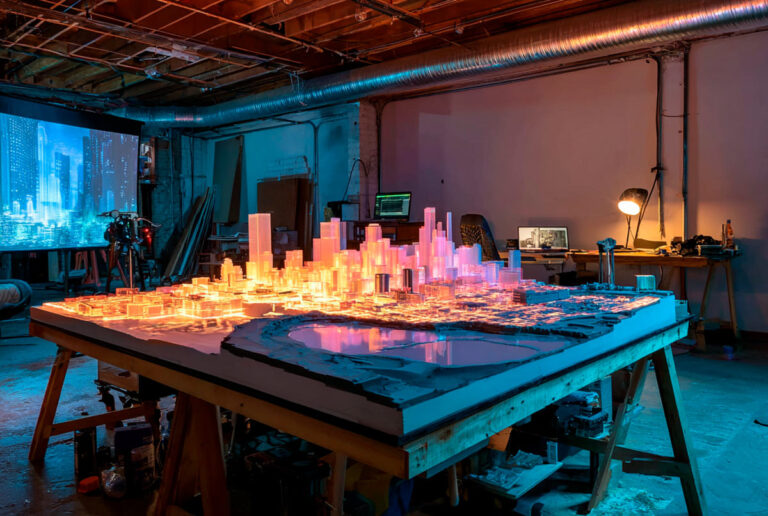
Architecture and urban planning
In architectural studies and urban planning exhibitions, these models allow for showcasing the evolution of a project, highlighting construction phases, or indicating functional areas using sector lighting systems. They can also be adapted to represent changes over time or behaviors based on the use of the space.
The lighting not only reinforces the project's narrative, but also transforms it into a vibrant and easily understandable presentation for clients, technicians, or authorities..

Industry, technology and innovation
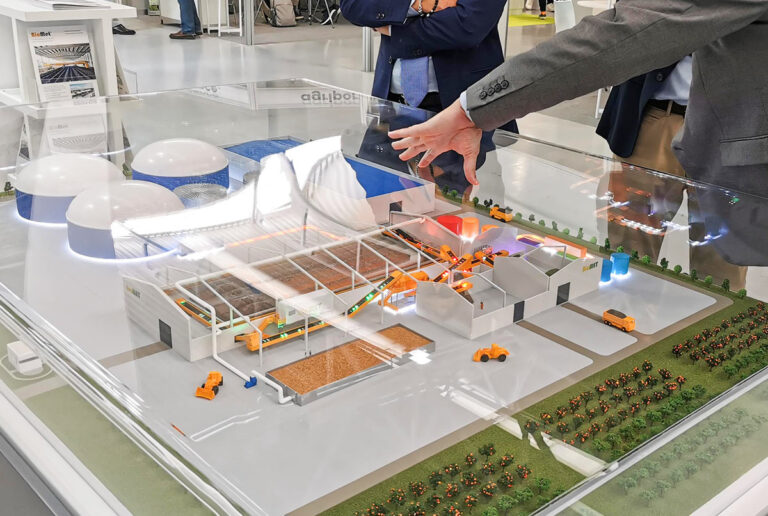
In industrial, innovation or research environments, interactive lighting allows the visualization of production processes, logistics flows or technical structures that would not be understandable without a clear visual guide.
LED systems can be activated to display circuits, simulate processes, or connect key points between functional areas. This type of model has become a valuable tool in technical training, internal presentations, and industry trade shows..
Trade shows and corporate presentations
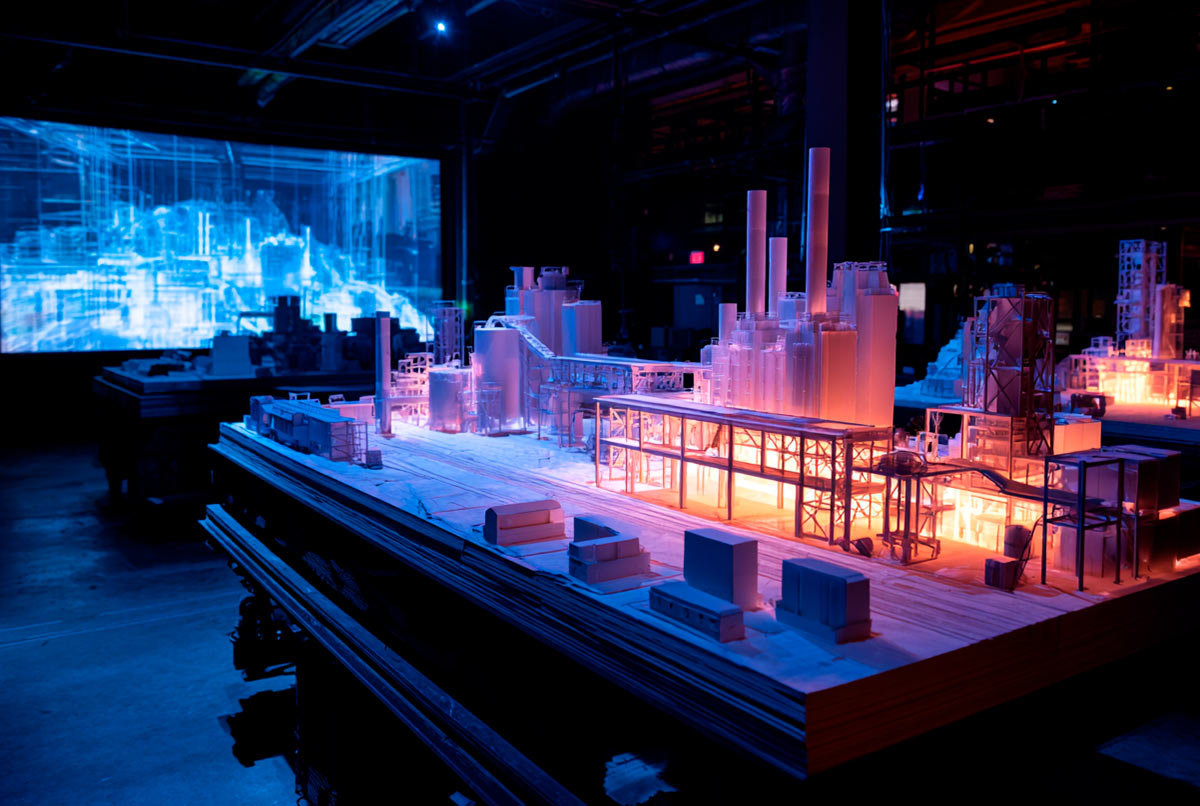
In the field of experiential marketing, models with interactive lighting are a powerful resource to stand out in trade fair environments or showrooms. They allow the creation of narratives that connect with the public through light: a button activates a tour, a sensor launches an animation, or a programmed sequence accompanies a commercial pitch.
Beyond the product, a story is conveyed and a memory is created., This makes these models a key asset in competitive environments.
Key benefits of models with interactive lighting
One of the most outstanding benefits of models with interactive lighting is their ability to facilitate the understanding of structures, processes, or technical concepts that would otherwise require extensive explanations. Light acts as a visual guide, marking routes, highlighting key areas, or showing temporal sequences. This allows the visitor or viewer to better understand what they are seeing, without the need for intermediaries or lengthy texts.
Immersive experience that connects with the audience
Beyond its informational value, interactive lighting adds an emotional component that transforms the model into an experience. The ability to activate lights, observe real-time responses, or follow a visual narrative actively engages the user.
This sensory connection enhances the impact of the message, creates a lasting memory, and makes the visit or presentation memorable..

Technology and integration in models with interactive lighting
Lighting systems tailored to each project
The heart of a model with interactive lighting is its lighting system, which can include programmable LED strips, COB light points, Neopixel technology or even backlit screens. The choice of system depends on the objectiveWhether technical precision, narrative atmosphere, or dynamic interactivity are desired. In all cases, the installation must be seamlessly integrated into the model, respecting its design and scale.
In IA Manufacturing We work on each project adapting the technology to the needs of the content, achieving clear, elegant and functional effects.
Interaction, sensors, and intelligent programming
The lighting can be activated in various ways: via physical buttons, proximity sensors, touchscreens, or even from a mobile device. Programming allows for synchronizing light effects with audio, narration, or projections., creating a coordinated system that enriches the user journey.
This technical flexibility allows the development of everything from linear experiences to fully interactive and customized systems..

Challenges and technical considerations in models with interactive lighting
Lighting control and exhibition environment
One of the main challenges when working with models featuring interactive lighting is controlling the lighting environment where they will be displayed. If the room is too bright, the lighting effects can lose visibility or narrative impact. Therefore, It is essential to anticipate ambient lighting conditions to ensure that interactive elements are clearly perceived and fulfill their function..
In some cases, it may also be necessary to integrate the model into furniture or display cases that help to reinforce the contrast and directionality of the light.
Scalability, maintainability and reliability
Another key consideration is the durability and maintainability of LED systems and sensors. As technical complexity increases, so do the needs for servicing, upgrading, and support.
Therefore, Choosing reliable components, stable programming, and a modular design are essential to ensure the project's scalability over time..

Estimated costs of models with interactive lighting
Variables that influence the budget
The cost of a model with interactive lighting depends on several factors: the size and level of detail of the model, the type of lighting technology integrated, the complexity of the control system, and the customization of the programming. Incorporating addressable RGB LEDs, sensors, or screens involves a greater investment than a static or manually switched-on system.
Besides, Elements such as exhibition furniture, integration with other devices, or the need for audiovisual development can increase the final budget..
Investment range and practical examples
In general terms, a simple interactive model —like the Solar360 project— can start from €5,000, while more advanced solutions —like Biomet, with customized industrial interaction— they can exceed €15,000, depending on the objectives and the environment in which they are displayed.
In all cases, clearly defining the intended uses from the outset helps to optimize the investment without losing functionality or impact.

Conclusion and future vision for models with interactive lighting
A resource that evolves with each project
Models with interactive lighting not only offer high visual value, but have also become a strategic tool for clear, engaging, and memorable communication. They are used in museums, trade fairs, technical studios, and innovation centers., This technology allows a simple model to be transformed into a guided and sensory experience that connects directly with the public.
Technology that adapts and grows
Looking to the future, these solutions will continue to evolve with the integration of new technologies such as artificial intelligence, automation, and augmented reality. This opens the door to even more personalized, reactive, and adaptable user experiences, expanding the narrative and functional possibilities of each project.
At IA Manufacturing, we continue to explore this line with the aim of designing models that are not only seen, but experienced.

Did you enjoy this article?
Want to see other similar posts?

