
Everything you need to know about a landscape model: uses, challenges and costs

Francisco Piqueras
A landscape model is not simply a visual aid within a project. It is the element that defines the relationship between architecture and environment. A model can be perfectly executed in volume and detail, but if the landscape is poorly represented, it loses value and credibility.. The terrain, the paths, the vegetation, or the transitions between built and natural areas are not additions: they are a fundamental part of the design narrative.
A tool for persuasion and decision-making
The visual impact of a presentation depends largely on how the surrounding environment of the project appears. A well-executed landscape model helps to understand proportions, uses, and overall feel. It is a key tool for validating design decisions and connecting emotionally with the viewer., whether it's a client, a jury, or a technical team.

How to represent proportions and elements of the environment
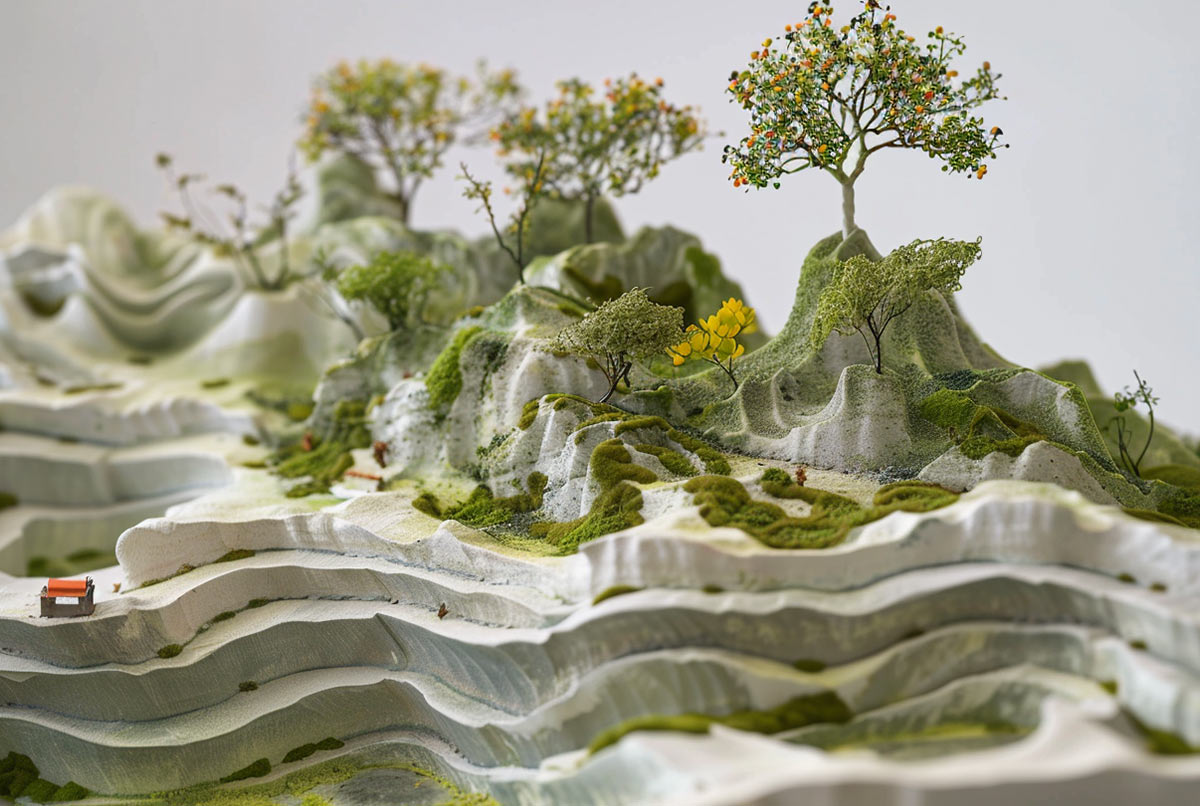
A landscape model must begin with an accurate reading of the terrain. Correctly representing changes in elevation, slopes, platforms, or embankments is what allows us to understand how construction will take place on that space. Topography is not a neutral background: it defines routes, access points, views, and visual relationships. Without a precise foundation, everything else loses its meaning.
To accurately represent natural and built elements
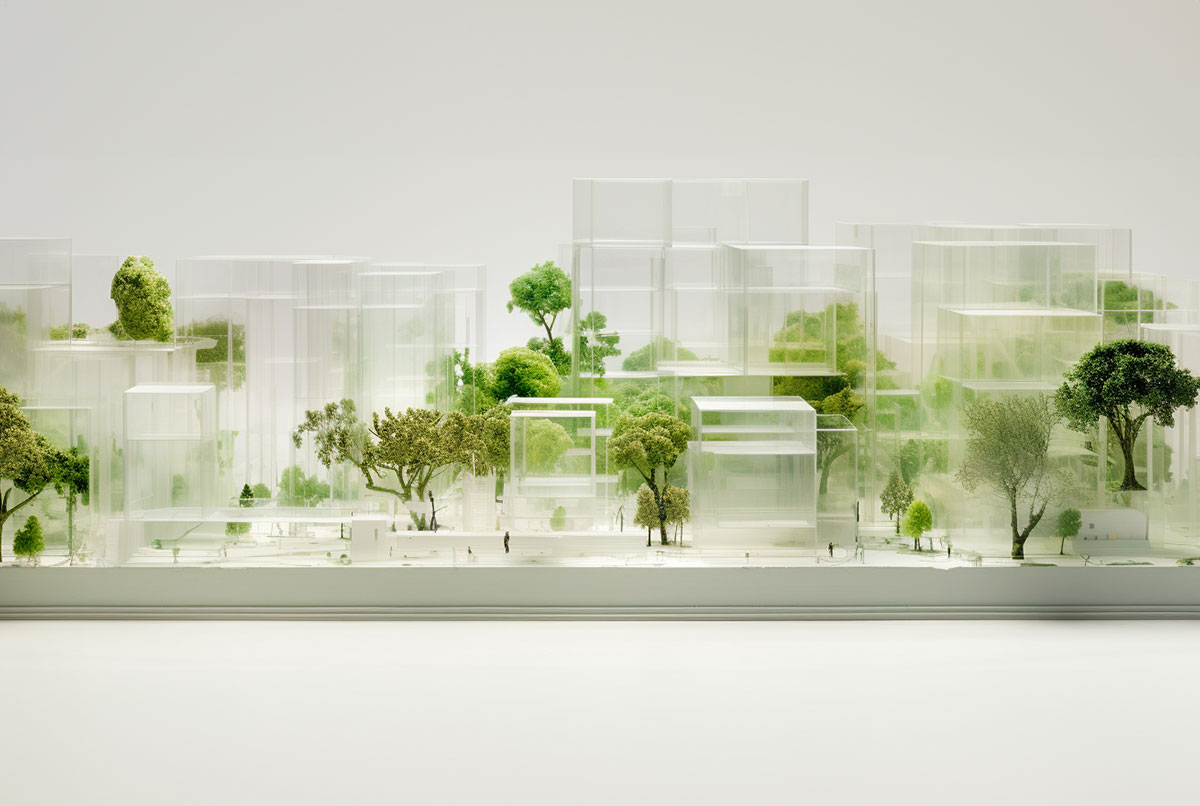
The landscape is composed of trees, low vegetation, paths, water, furniture, and structures. Each element has a place in the model. The key is to maintain the real proportions and avoid exaggerations that distort the overall perception. It's not about decorating, but about showing how each part integrates into the environment.
The balance between the technical and the visual
A landscape model must be clear, precise, and, at the same time, attractive. If it's too schematic, it doesn't communicate. If it's too cluttered, it's distracting. The balance lies in... choosing what to show and how to show it, so that anyone who sees it can quickly understand how that space is organized and experienced.

Essential materials for a realistic landscape model
Every element of the landscape needs its own treatment. To represent vegetation, the following are commonly used mosses, lichens or dyed plant fibers, which add volume and texture. The ground or paths can be made with fine sand or gravel, while hard surfaces are made with cardboard, balsa wood, or resins.
Representing water: a challenge that requires technique
Lakes, rivers, or ponds are difficult to create, but highly valued when done well. The following are typically used for these elements: clear resin, Sometimes with dyes or superimposed layers to simulate depth and movement. The effect is very powerful if applied carefully and in proportion.
Vegetation, yes, but with discernment.
The project doesn't need to be filled with trees all over the model to be understood. The important thing is that The species are well placed, in correct proportions, and without saturating the scene.. Too much decorative vegetation can detract from what is essential and divert attention.
Challenges and limitations when building a landscape model
One of the most common mistakes in a landscape model is losing the proportion between elements. A tree that is too large or a path that is out of scale can completely alter the perception of the space. The coherence between topography, vegetation, and architecture is key so that the whole thing works.
Replicating nature is not easy
Simulating natural textures like grass, bushes, or water involves combining materials skillfully and judiciously. It often requires trial and error. Achieving a credible result requires time, patience, and a good selection of techniques.. Not everything can be represented literally; sometimes, suggesting is more effective than detailing.
Fragility and durability: a difficult balance
Landscape models tend to be fragile, especially when they incorporate organic materials or small elements. Transporting or storing them can become a problem. Choosing durable materials and planning for invisible structural reinforcements helps preserve them for longer. without sacrificing aesthetics.
Time and cost: two variables that weigh heavily
The more detailed a landscape model is, the more resources it consumes. The challenge lies in finding the right balance between detail, functionality, and budget., Especially if it's a project with tight deadlines. Knowing where to simplify without losing the essence of the project is part of the craft.
How much does a landscape model cost?
The price of a landscape model for a house depends on the level of detail, the type of materials, and the size of the plot. For a single-family home with a simple design, the cost typically starts at 2,000 euros, including basic elements such as modeled terrain, generic vegetation, and main paths. When a more detailed model is desired, with custom vegetation, realistic surfaces, and some visual effects, The price can exceed 4,000 or even 5,000 euros.
Gardens and outdoor spaces: DIY or professional options
If the goal is to represent a small garden, a simpler version can be chosen. A handmade model, made with cardboard, paints, plastic plants and a wooden base, can cost between 20 and 150 euros, Depending on the level of finish. In contrast, a professional model of a garden, with realistic vegetation, resin for water features, and structural elements, usually starts from 800 euros and can reach 3,000, depending on the complexity.
What makes a landscape model more expensive?
The final price increases with each extra element: hyper-realistic vegetation, resin to simulate water, LED lighting, acrylic bases or custom structures. Presentation finishes, such as display cases or secure transport systems, also influence the total cost. High-end models, for competitions or exhibitions, can reach 10,000 euros if they include all these elements.

Advantages and disadvantages of landscape models
A well-executed landscape model allows to understand at a glance the relationship between architecture and its environment. It is a powerful tool for communicating ideas to non-technical audiences, as it translates plans and renderings into a tangible experience. It also facilitates decision-making, improves team collaboration, and enhances the impact of presentations to clients or juries. Furthermore, it is an excellent educational resource and a valuable addition to any architect's or landscape designer's portfolio.
Visualizing sustainability in design
A landscape model can also showcase sustainability strategiesUse of native vegetation, water harvesting systems, permeable or shaded areas. These elements are not always well understood on paper, but physically representing them helps to visualize their real impact on the environment.
Disadvantages: cost, time, and delicate materials
Among the main limitations are the time required to build them and the cost of doing them well. They are also fragile objects, requiring specific care for their transport and preservation. Furthermore, if unsustainable materials are used, they may contradict the values of the project they represent.
Finding the right balance
The key is to define the objective of the model from the beginning. Not all models need the same level of detail or the same materials. Choosing what to show and how to do it allows you to take full advantage of the potential of the landscape model without wasting unnecessary resources..

Did you enjoy this article?
Want to see other similar posts?

