
Landscape models for architecture, practical use

Francisco Piqueras
Models in landscape architecture are essential for anticipating and addressing design challenges in advance. For example, their use allows evaluate how best to integrate vegetation that fulfills both aesthetic and ecological purposes.
This includes the creation of natural barriers that attenuate noise, as well as the improved shade in rest areas. Additionally, the models are useful for experimenting with rainwater harvesting systems, facilitating their integration into landscape design. This promotes sustainable practices from the project's outset.
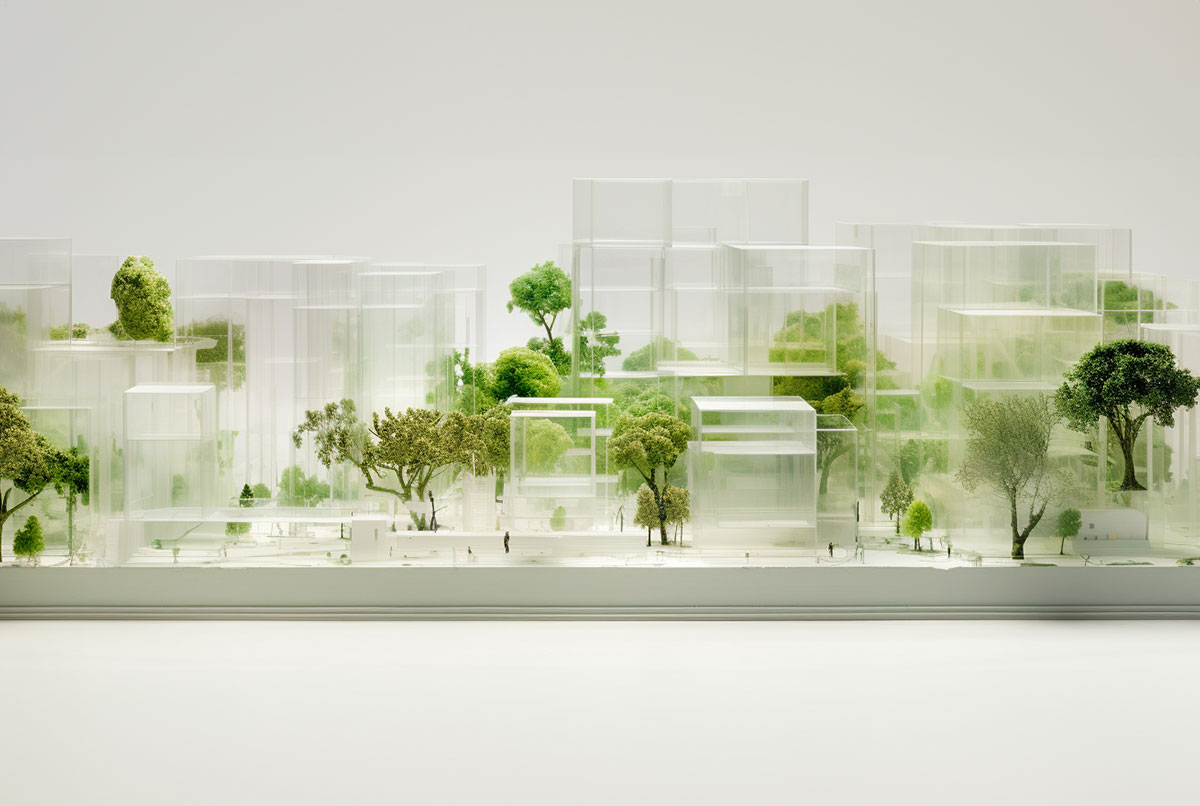
Advantages of using scale models in outdoor space planning
The use of models in landscape architecture brings with it multiple advantages:
Advance viewing: It allows designers, clients, and stakeholders to gain a clear understanding of the project, visualizing how natural and artificial elements will be integrated.
Troubleshooting: Identify potential design problems, such as incorrect plant layout or inadequate water management, before they become costly mistakes.
Experimentation with materials: Models offer the opportunity to test different materials and their interaction with the environment, ensuring the right choice for each element of the design.
Effective communication: They facilitate communication between the different teams involved in the project, from architects to landscape designers and builders, ensuring that everyone shares the same vision.
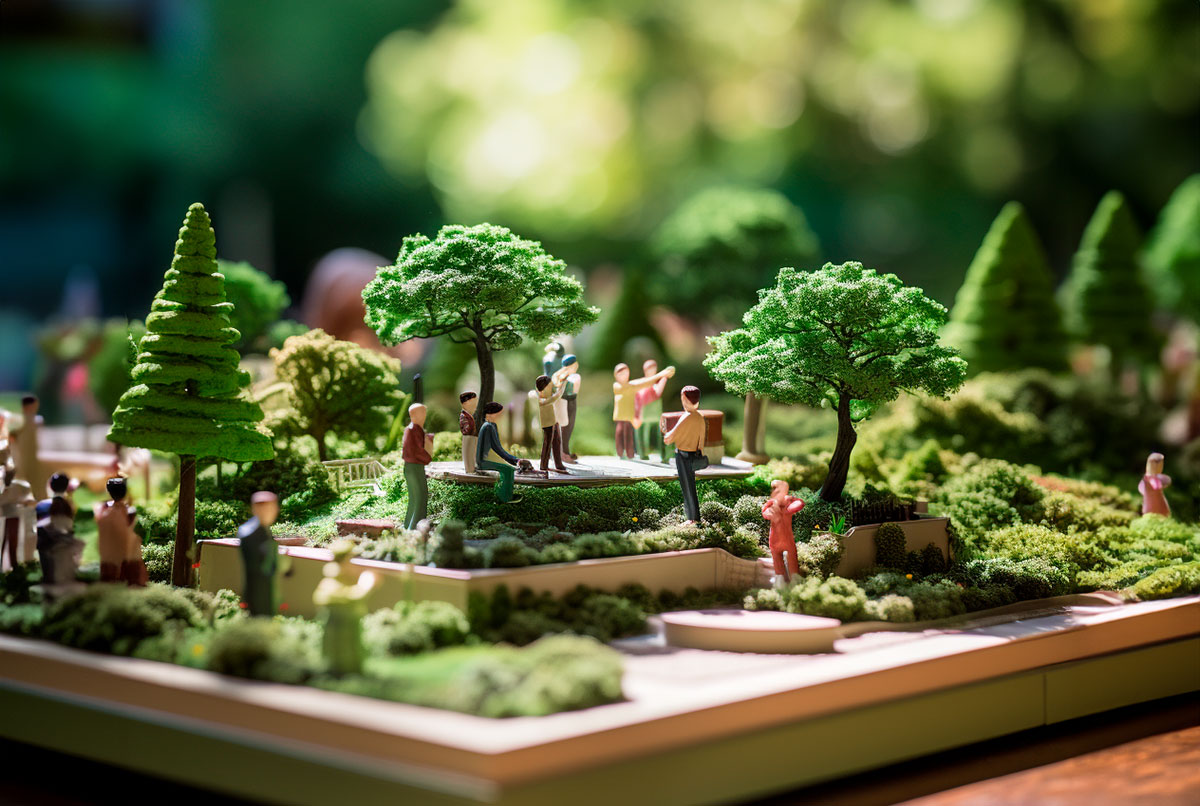
Gardening: the foundation of landscape architecture
When we apply these principles to the design of landscape models for architecture, it is essential to represent each element with precision and purpose. Within this context, a garden should be more than just a collection of plants; it should be a defined space, Designed with intention and care to meet several essential criteria:
Sense of aesthetics and space
Each plant and mineral element in the model must be placed with a clear intention, seeking contribute to the overall harmony of the design. This involves a careful selection of plants and other elements that complement and enhance the surrounding architectural structure.
Defined space
The model should clearly delineate the area designated for the garden, marking its boundaries and defining how it integrates and flows within the architectural ensemble. This helps to visualize the interaction between built and natural spaces, ensuring that the final design is cohesive.
Human adaptation
It is essential that the model shows how people will interact with the garden. This includes paths, rest areas, and other elements that facilitate access and human activity., ensuring that the space is not only beautiful but also functional.
Integration with nature
The model should reflect how the garden integrates with existing natural elements and how it contributes to the area's biodiversity. This involves including a variety of plants and minerals that mimic or complement natural ecosystems., promoting sustainability and respect for the environment.
By focusing on these aspects, models in architectural landscape design serve not only as visualization tools but also as practical guides. They are commonly used for the creation of outdoor spaces that are aesthetically pleasing, functional and in harmony with the natural environment.
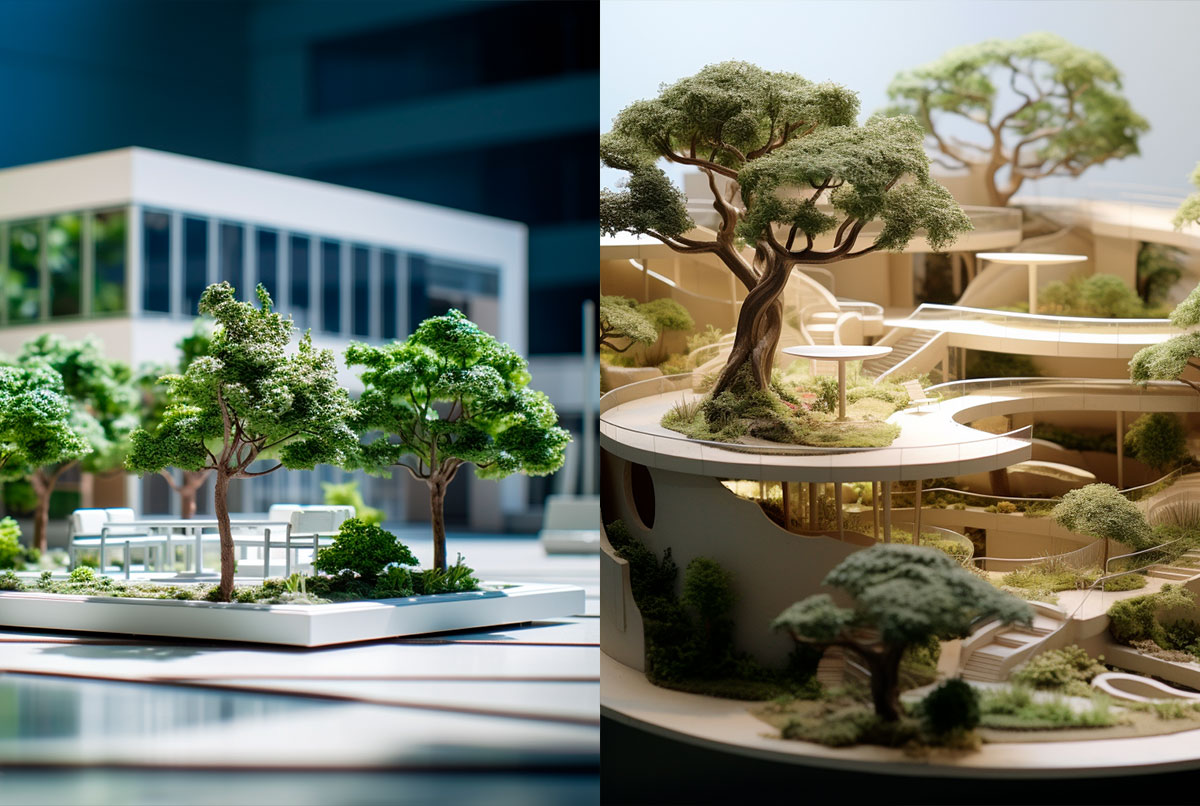
Exploring landscaping types in architectural models
Landscape design, in its essence, must harmonize with multiple factors such as architecture, the climate, social needs, the concept of the work and the geographical context.
This interaction of factors gives rise to different types of landscaping, each with its own unique characteristics and approaches. By applying these concepts to the design of landscape models for architecture, the possibilities of each style can be explored and visualized in the context of real projects.
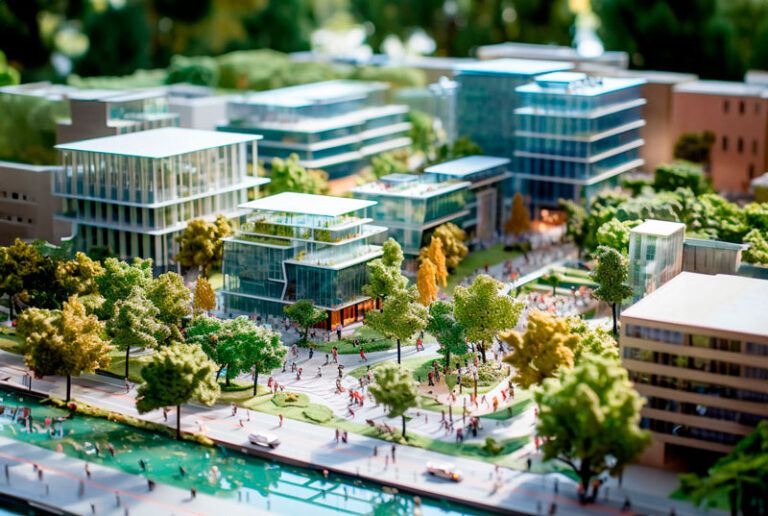
Urban landscaping: integrating nature into the urban fabric
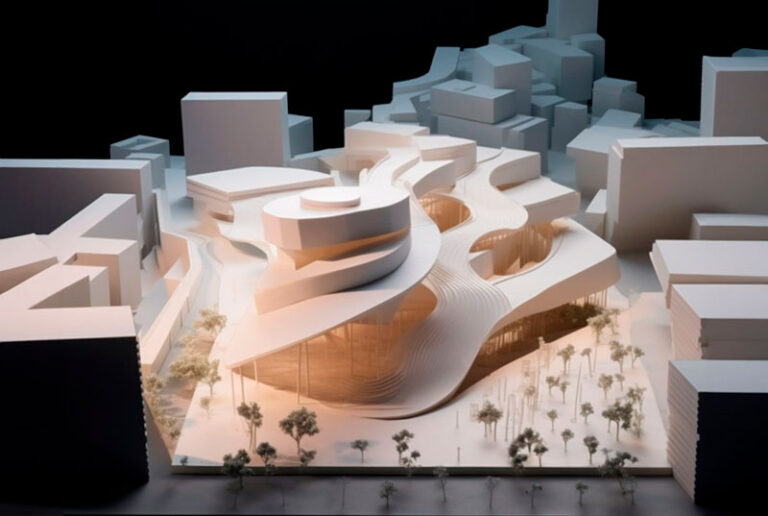
Urban landscaping seeks to address the urban growth and the need for green spaces that connect people with nature. In scale models, green areas, parks, and vertical gardens are represented in large-scale projects, such as buildings, airports, and transportation hubs.
These visual representations illustrate how landscape design can improve the quality of urban life., promoting a balance between development and environmental sustainability.
Modern landscaping: minimalism and functionality
The modern approach to landscaping is characterized by its simplicity, clean lines, and neutral color palette, reflecting trends toward minimalism and efficiency in the use of space and resources. When designing models with a modern landscape approach, Special attention is paid to the selection of vegetation and the arrangement of natural elements in strategic locations., seeking not only aesthetics but also functionality and comfort.
This type of model demonstrates how landscaping can complement contemporary architecture., creating serene and orderly environments.

Sustainable landscaping: towards ecological integration
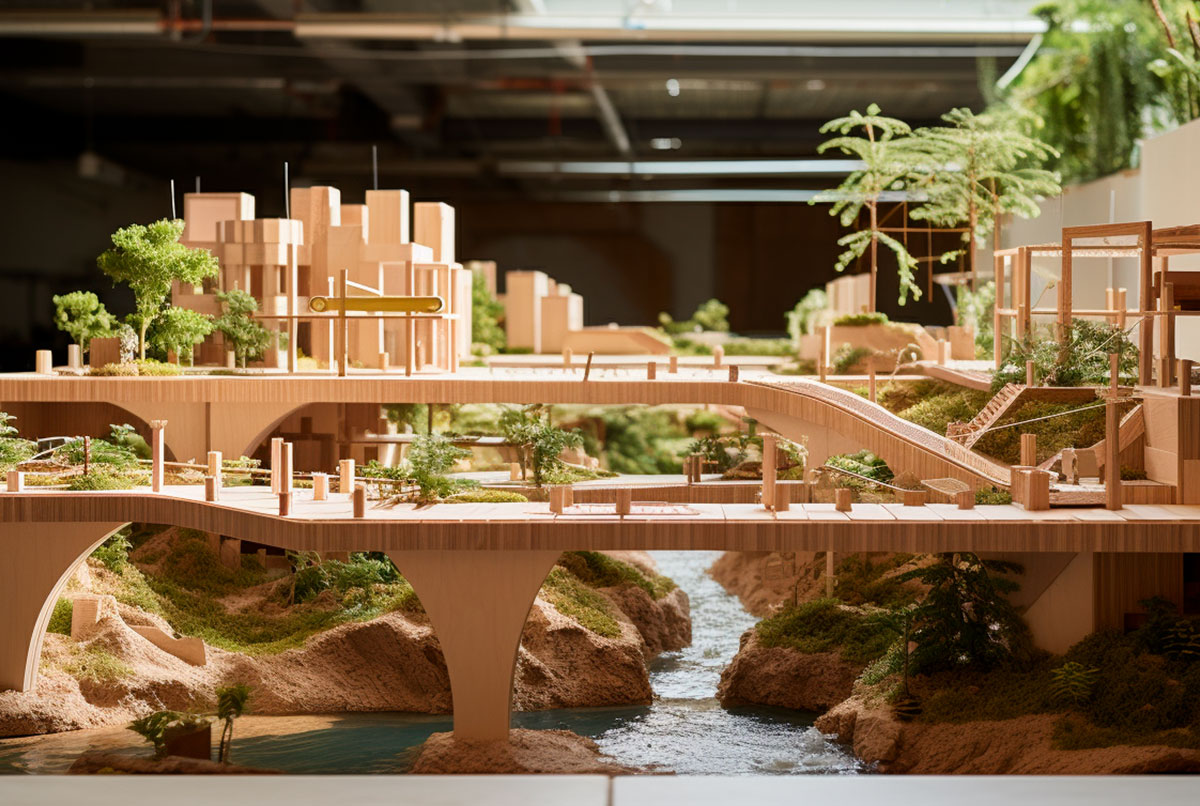
Sustainable landscaping focuses on creating spaces that respect and promote biodiversity, using techniques and materials to reduce environmental impact.
Scale models incorporate rainwater harvesting systems, gardens that utilize greywater, and solar energy. These representations allow designers, clients, and stakeholders to... to understand how projects can contribute to environmental conservation, promoting more sustainable practices in gardening and construction.
Conclusion: Visualizing the future of landscape architecture
The use of models in landscape architecture is not only a practice that enriches the design phase, but also It becomes an essential tool for decision-making informed. This allows everyone involved to visualize the impact of each element before its actual implementation.
Through the models, we can explore the diversity of landscape design—urban, modern, and sustainable—and its harmonious integration with the architecture, adapting to current needs without losing sight of sustainability and human well-being.
If you're considering taking your architectural landscaping project to the next level, A model is the ideal starting point to transform your ideas into a tangible reality.. We invite you to contact us to discuss how we can help you visualize and refine your vision, ensuring that the final result is not only beautiful and functional, but also a reflection of a commitment to quality and sustainability.
Write to us today to start bringing your architectural landscaping project to life.

Did you enjoy this article?
Want to see other similar projects?

