
Construction section models: uses, challenges and costs

Francisco Piqueras
The construction section in models is a reproduction of a vertical —or transverse— cut of an object, structure or building. It allows you to visualize its interior without needing to dismantle or build it, making something normally invisible tangible.
Universality of its application
They are used in architecture, engineering, industrial products, technological devices, training, and museum design. Their value lies in enabling think, explain and validate Functional designs. From understanding structural flows to assembly processes, They translate technical concepts into something visual and accessible..
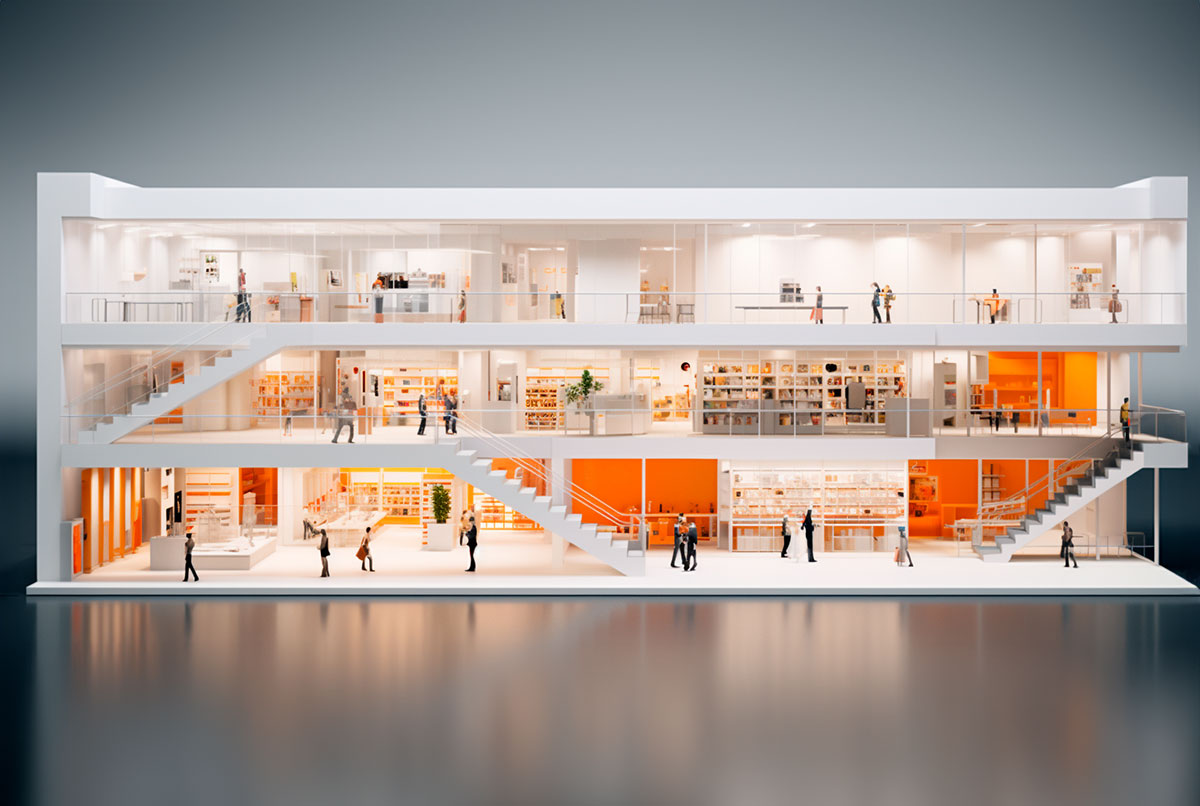
How do these models represent the technical and functional details?
The model must show all internal dimensions: thicknesses, radii, distances between components, and functional voids. The section helps to understand how the pieces interact, how everything is assembled, or how a system flows.
To accurately represent natural and built elements
The physical components—casings, structures, ducts, or circuits—must be well represented. This includes making visible assemblies, material connections, joints, or construction systems, depending on the sector.
Visual resource to highlight what's important
The use of different colors, textures or materials It allows us to emphasize what is essential: a solid part versus a conduit, or the electrical versus the structural. In this way, the observer understands how it works without further explanation.

Sectors where the construction section is used in a model
The usefulness of a construction section model is not limited to architecture. Their ability to reveal the inner workings of an object or system makes them a versatile tool across multiple technical and educational sectors. Whether representing a structural solution, a mechanical process, or an electronic assembly, these models help to understand, communicate, and optimize complex ideas.

Architecture and urban planning
In this field, construction section models are used to show vertical cuts of buildings, urban spaces, or infrastructure. They help visualize how the levels connect, how light enters, how spaces are distributed, and how materials are assembled.. They are common in architectural studies, competitions, and exhibitions.

Civil engineering and infrastructure
Here, the construction sections allow us to represent bridges, tunnels, roads, dams or hydraulic systems. These models show internal details that are not visible from the outside, such as foundations, reinforcements, ducts, or technical chambers. They serve to explain structural functioning and construction processes.
Industrial design
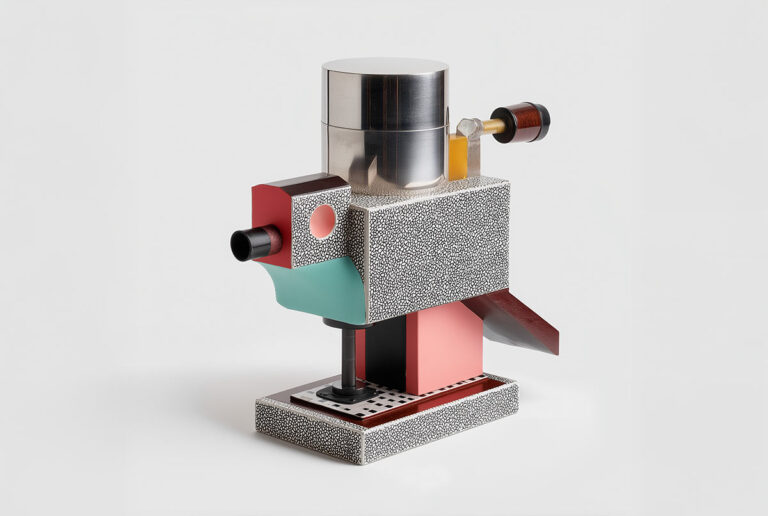
In product design, construction section mock-ups are used to show the interior of machines, devices, tools or technical packaging. They are key to understanding the relationship between components, mechanisms, materials, and accessibility. They help evaluate assemblies, maintenance, or potential design improvements.

Technology and electronics
In this sector, models can represent electronic systems, motherboards, circuits or technical housings. The sections show how the components are arranged, how energy flows, or how heat is dissipated. They are very useful for technical training, prototype design, or presentations to investors..

Technical training and museography
In educational and exhibition contexts, construction section models allow to explain complex processes in a visual and accessible way. From turbines to engines or construction systems, they are used for teaching how a system works inside. In museums, they are educational tools with great informative value.
Energy industry and mechanical systems
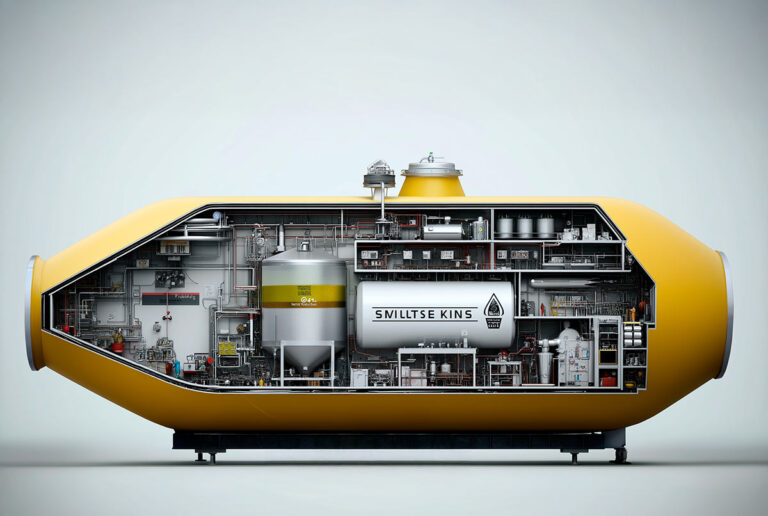
Construction sections are also used to represent thermal power plants, turbines, solar energy installations, hydraulic or wind. These models explain how energy is generated, transformed, and distributed. They also show the interaction between mechanical, thermal, and electrical systems.

Common challenges in industrial, technological, and educational projects
Choosing the appropriate level of detail
One of the biggest challenges when designing a construction section model is define to what extent internal details should be shown. In industrial projects, this can involve very small parts or complex systems, requiring a balance between precision and legibility. Too much detail can overload the model; too little, and it loses its informative value.
Materials and manufacturing techniques
Each sector has different requirements. While architecture uses lightweight and versatile materials, technology requires greater precision and strength.. Choosing the right materials and the most suitable cutting or printing techniques is key to ensuring an effective and lasting result.
Audience interpretation
In educational or outreach contexts, the biggest challenge may be getting the model to work. be understandable for those without technical training. It is essential that the cuts, colors, and labels help to correctly interpret the information represented.

How much does a construction section model cost?
The price of a construction section model depends mainly on three factors: the size of the object represented, the internal complexity of the system, and the materials used. A large-scale industrial model, with moving parts or lighting, will not cost the same as a static cut in foam board.
Indicative budget ranges
Simple or educational projectsThey can be made for less than €300, using basic materials and functional finishes.
Technical or semi-professional modelsPrices range from €800 to €2,500, incorporating customized parts, 3D or laser printing, and more elaborate graphic elements.
Presentation or high-precision modelsThey easily exceed €6,000, especially if they require premium finishes, complex sections, or interaction with lighting or screens.
Strategic investment
Beyond the cost, it's important to understand that these models They represent a key investment in communication, technical validation, and customer acquisition or financing. In sectors such as engineering or technological design, a good model can make all the difference in a presentation or tender.

Did you enjoy this article?
Want to see other similar posts?

