
Delivery times for professional models: plan and secure the date

Francisco Piqueras
We live against the clock. Everything is measured in productivity, efficiency, and immediate deliveries. In this context, it's normal that when someone commissions a professional model, the first question they ask is: “"When will you have it?"”. However, That approach doesn't quite fit the delivery deadlines for professional models..
Unlike other industrial processes, a model is not mass-produced nor does it follow repetitive formulas. Each one is unique. a handcrafted piece, With a technical and creative approach that changes radically from one project to another, talking about delivery times isn't as simple as giving an exact figure.
But don't worry: In this article, we'll help you understand delivery times for professional models, how to plan your project without surprises, and what you can do to make the process easier..

Why can't the lead times for model making be standardized?
Each model is unique, and that changes everything.
In a world where everything seems to be accelerating and becoming automated, scale models remain a haven of artisanal, meticulous and unique work. Unlike a production line where tasks are repeated, in model making each project is a completely different story.
Even if they look similar, no two models are ever the same: The materials, the scale, the finishes, the mechanisms, the context all change… And that completely transforms execution times.
There are no standardized processes or fixed times.
As model makers, we are often asked how many days it takes to make a model, and although we try to give an estimated answer, the truth is that It is impossible to establish a standard timeframe..
What may seem simple at first glance actually requires a huge amount of adaptation, problem-solving, testing, and adjustments. There are no repeatable patterns here, nor predictable times., but tailor-made processes.
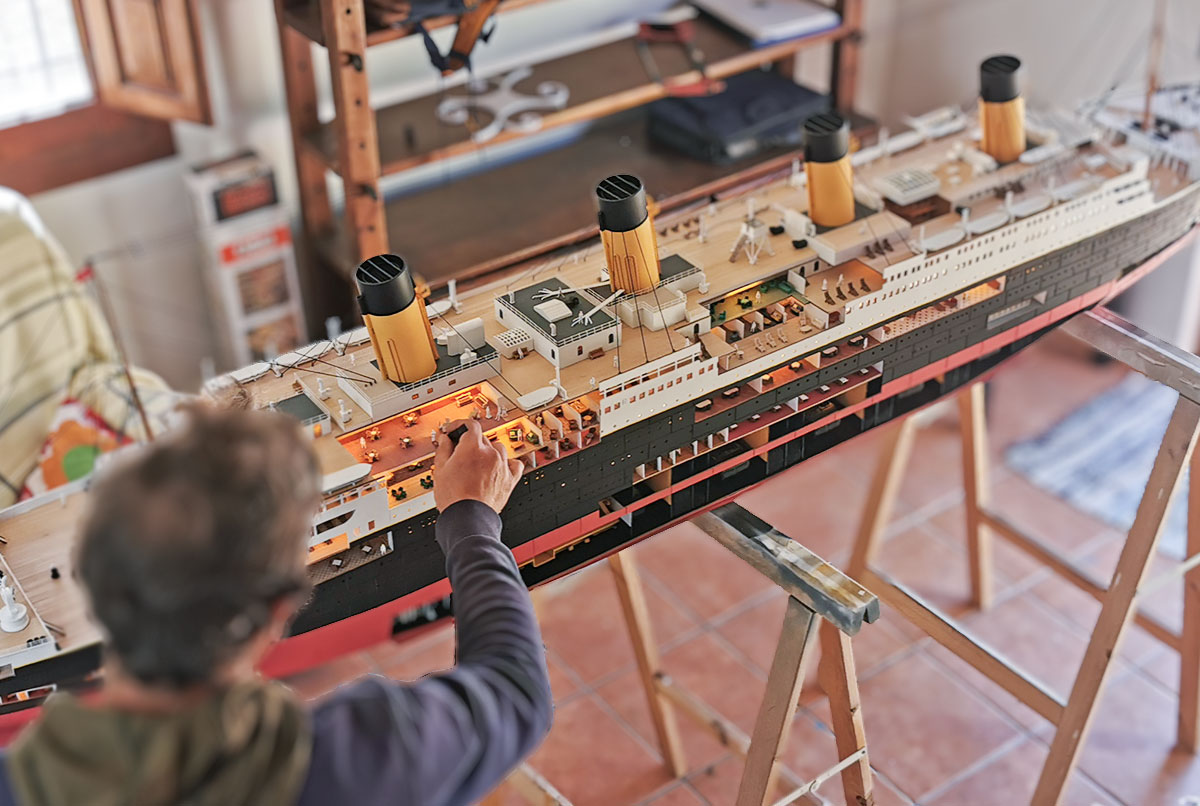
Delivery times for professional models according to the type of model
Although each model is different, over time we have learned to establish certain indicative ranges which serve as a guide for our clients. These timeframes are calculated in business days and they cover everything from the initial design work to the final delivery. Here's a useful reference:

Topographic models
Small (15 business days)A scale model representing a small natural or urban environment, such as a small park or a section of a city, with few raised features. Ideal for quick presentations or visual impact studies.
Large (25 business days)It represents a large territory with different levels, vegetation, bodies of water, and structures. It is often used in urban planning, land management, or landscape interpretation projects.

Architectural model
Small (20 business days)It represents a single building, usually on a smaller scale, without too many interior details. It is used in competitions or initial presentations.
Large (30 to 40 business days)It includes a set of buildings, urbanization, vegetation, vehicles, and street furniture. It may have ambient lighting or removable roofs to reveal interiors.

Industrial model
Small (20 business days): Compact model of a machine, technical piece or part of an installation, with a more functional than decorative focus.
Large (40 to 50 business days): Scale representation of an industrial plant, assembly line or logistics system, including signage, routes and auxiliary structures.

Interactive model with lighting
Small (30 business days)A model that uses spotlights to highlight specific areas (such as homes sold in a residential complex). It may have physical buttons for activation.
Large (40 to 60 business days): Includes sequential or programmed lighting, simulation of schedules (day/night), and zones differentiated by colors, useful in museums or permanent exhibitions.

Interactive model with touch control system
Small (35 business days): Model of a building or installation with a side touch screen, from which lights are activated or synchronized digital content is displayed.
Large (45 business days): Integration of large touch screen or custom software, with multiple activatable zones, projections or state changes visible on the model.

Interactive model with mechanical elements or sensors
Small (40 business days): Model with a small visible mechanism (a gate that opens, a vehicle that moves), activated manually or automatically.
Large (50 business days)Includes sensors, motors, lights, sound, or complex moving parts. Ideal for interpretation centers or simulators of industrial or urban processes.
They tell you 40 days? Think 60.
There is one aspect that is often overlooked but is key: the actual availability of the workshop. Although we can tell you that a model can be made in 40 business days, that doesn't mean we can start tomorrow. Model-making workshops usually have several projects underway and They cannot stop their production rate Waiting for new orders. Therefore, if the estimated time is 40 days, the most sensible thing to do is place the order. at least 60 days in advance.
Planning ahead not only ensures your model is ready on time, but also allows you to work with margin and quality.

What factors directly affect delivery times
A static model is not the same as one with interactive systems. The greater the technical complexity, the more time we will need to develop and test it with guarantees.
The models that incorporate lightning, Sensors, automation systems, or touch controls not only require more assembly work, but also an intensive testing phase. Even when we reuse existing technologies, Each project has different uses, And that forces us to redesign and validate from scratch.
Design, scale and finishes: elements that change the times
Sometimes, a small change in design can represent additional hours or days of work. Choose a very detailed scale, Requesting realistic finishes or including moving elements implies greater dedication and care in each phase of the process.
Every aesthetic or functional decision directly impacts delivery times for professional models. That's why it's key. carefully assess what level of detail your model needs. in relation to its final use.
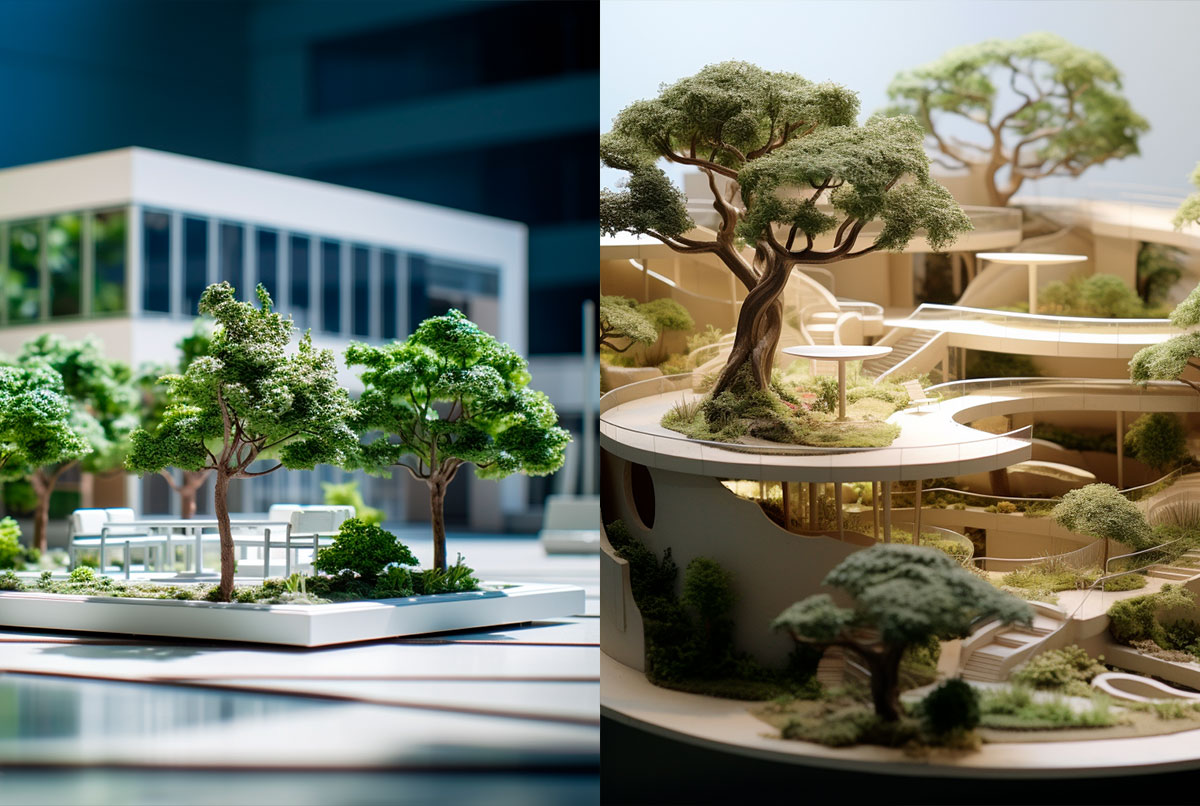
How to streamline the process: tips for forward-thinking customers
Provide clear, clean, and well-organized documentation.
One of the most common mistakes when ordering a model is underestimating the importance of the technical material that is delivered. The clearer and more refined everything is, the smoother the work of the layout artist will be..
If you can, prepare:
Clean architectural or technical drawings, without unnecessary dimensions or layers.
3D models exported with the essentials, eliminating furniture or irrelevant elements.
Clear operating instructions, especially if it involves interactive models.
This initial effort can save days—or even weeks—of work, avoiding misinterpretations or subsequent corrections.
Plan ahead: contact us at least 2 months in advance
In model making, Foresight is your best ally. Although development may take 30 or 40 business days, the workshop may be committed to other projects. Therefore, The best strategy is to anticipate at least two months before the date you need to have the model ready..
This not only guarantees you a slot in the workshop schedule, but also allows you to approach the project without rushing, with room for revisions, tests and improvements if needed.

The model maker's vision: sincerity, timing, and good work
We don't mass-produce, we build to order
Behind every model are hours of workshop time, tools, decisions, and above all, hands working with precision and skill. We don't follow fixed recipes., Because what we do is not mass production, but custom construction.
That's why, when you ask us for a deadline, we always try to give you a realistic, not optimistic, estimate. We want you to trust that We'll arrive on time, But also that you understand what lies behind each day of work.
If we collaborate well from the beginning, everything flows better.
The perfect model doesn't just come from the workshop, It is also built from communication with the client. When we truly understand what is needed, when it is needed, and what information we have, everything becomes simpler. And when we have enough time, we can do what we love most: We focus on the details, take care of the finishes, and deliver a model that speaks for itself..
Thank you for trusting in our handcrafted work. And above all, thank you for planning ahead.

Did you enjoy this article?
Want to see other similar posts?

