
Landscape model: what it is, its uses, challenges, costs and applications

Francisco Piqueras
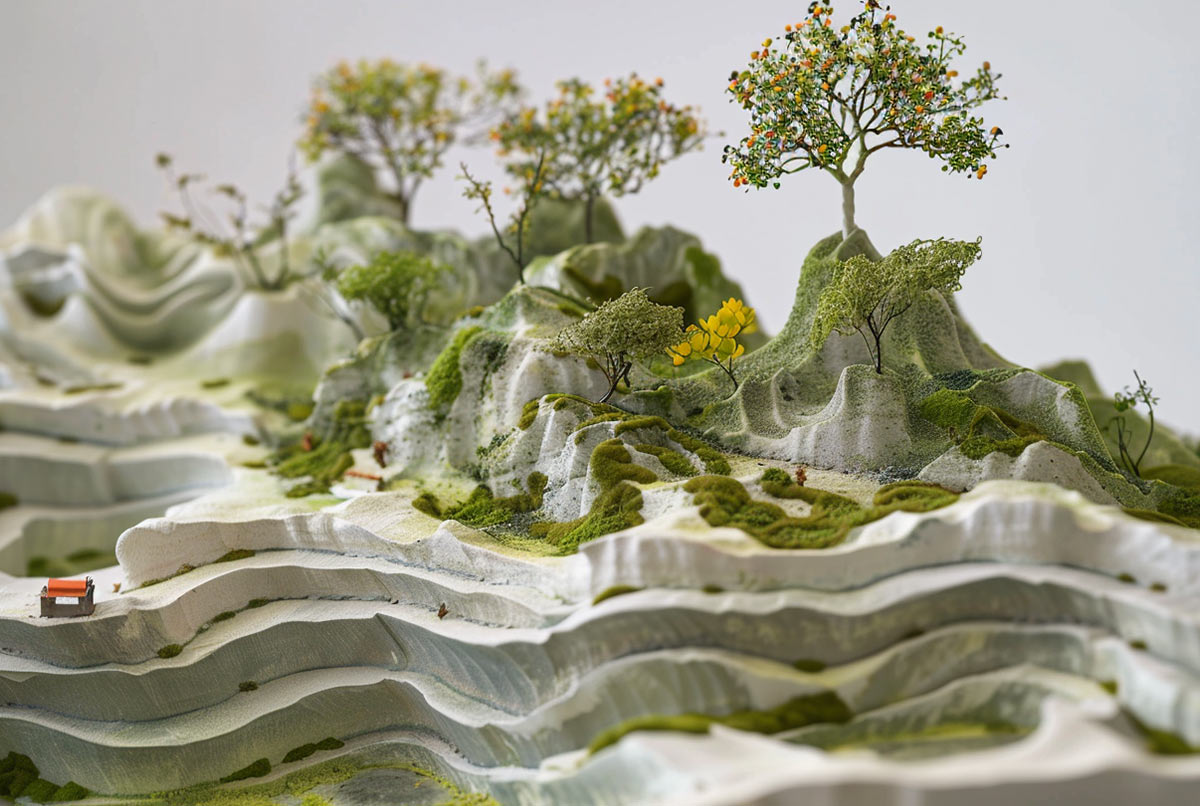
A landscape model represents a terrain with its shapes, slopes, vegetation, and integrated buildings. It is used to study how a project relates to the environment, from both a technical and visual point of view. In many cases, it allows us to understand routes, shaded areas, access points, or the arrangement of natural elements.
A key resource in projects that work with the territory
These models are not only used to present a project, they also help in its development. During the design process, they allow for testing decisions, understanding proportions, and identifying potential conflicts with the topography or vegetation. Having a global view of the terrain at scale facilitates dialogue between the technical team, clients, or institutions., and allows for more confident decision-making.
Why use a landscape model?
When a project involves the land —whether urban, rural or natural—, it is very useful to have a physical representation that shows how the design is articulated with the environment. The landscape model allows you to visualize spatial relationships that are sometimes lost in plans or renderings.Slopes, pedestrian paths, vegetation, buildings, roads or shaded areas take shape in a clear and understandable way.
This ability to synthesize makes the model a working tool for both technical teams and public presentations, competitions or meetings with promoters. It is concrete, direct and easy to understand.
Visualize proportions and paths
One of the great advantages of a landscape model is the ability to study the project from multiple angles. How do you access it? What can you see from each point? How do the terrain elevations change? All of this becomes evident when you hold the relief in your hands, allowing for more informed decisions regarding location, circulation, or design of open spaces.
An effective communication tool
In addition to aiding the internal process, these models are very useful when the project needs to be shared with others. Whether with a client, a jury, or an administration, the model facilitates dialogue and prevents misunderstandings. There's not much to explain: the model shows it, and that's enough..

Key elements and materials in a landscape model
A landscape model can have many levels of detail, but it should always clearly reflect the topography, vegetation, and buildings that are part of the environment. Choosing the right elements to represent and the materials to use is key to ensuring the result is functional and visually coherent.
Fidelity to the terrain depends not only on the scale, but also on the representation criteria: what is highlighted, what is simplified, and how the reading of the whole is organized.
Topography, vegetation and buildings
The basis of every landscape model is the landThe slopes, cuts, and levels are all included. Roads, rivers, green spaces, buildings, and other elements such as embankments or retaining walls are incorporated into the design. In some cases, street furniture or details such as shadows and views are also represented.
How to organize the elements according to the message
In addition to accurately representing the environment, the model must be organized in a way that clearly conveys the intended message. This involves decide which areas to highlight —areas of use, routes, points of interest— and use materials, colors or levels of detail that reinforce that reading.
The way in which the elements are distributed or emphasized influences the interpretation of the project, Therefore, it is advisable to plan visually before executing.
Materials for representing nature
To depict the landscape, materials such as foam, cardboard, cork, wood, or molded resins are used, along with decorative elements like synthetic moss, sand, gravel, or small artificial plants. Water, for example, can be made with clear epoxy resin, while vegetation can range from splashes of color to miniature trees.
The most important thing is that the materials chosen reinforce the project idea and do not distract from its overall understanding..
The way in which the elements are distributed or emphasized influences the interpretation of the project, Therefore, it is advisable to plan visually before executing.
Challenges and limitations in landscape modeling
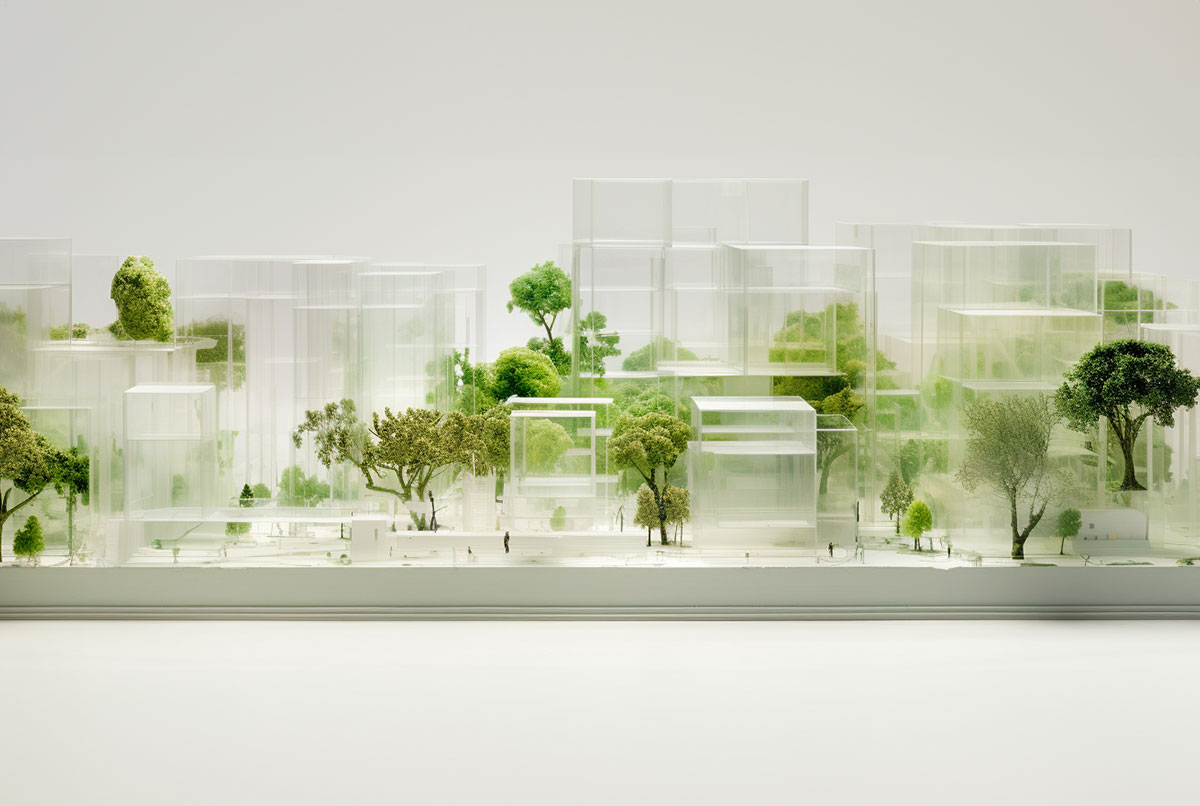
Although landscape models are very effective as a communication and analysis tool, they also present certain technical and creative challenges that should be taken into account. Achieving a balanced representation Balancing visual, informative, and functional aspects is not always easy, And each project presents its own demands.
Furthermore, the use of natural or detailed materials can increase the fragility of the model, requiring structural solutions and careful design from the outset.
Scale, proportion, and representation criteria
One of the main challenges is getting the level of detail right. according to the scale. In very small models, it's easy to fall into the trap of including too many elements, which ends up being confusing. Conversely, in larger scales, special care must be taken with proportions so that the whole doesn't lose coherence.
The key is knowing what to show, what to suggest, and what to leave out., depending on the project's objectives and the target audience.
Fragility and manufacturing time
Representing terrain, trees, or elements like water or natural textures requires time and skill. Sometimes, replicating a complex relief can take hours of manual work, especially if a handcrafted or highly detailed finish is desired. Furthermore, some decorative materials can be delicate and require protection if the model will be transported or handled frequently.
That's why it's important to plan each part of the process well and choose solutions that balance aesthetics, durability, and functionality..

Estimated costs of a landscape model
The cost of a landscape model can vary greatly depending on the size, level of detail, and materials used. It also depends on whether elements such as lighting, demountable structures, or special finishes are incorporated.. Sometimes, what seems like a simple change—like adding realistic vegetation or resin to represent water—can multiply the working hours and the final budget.
Ideally, the objective of the model should be defined from the beginning in order to adjust the design and resources to what is really needed.
Factors that determine the budget
The factors that most affect the price include the overall scale, the complexity of the terrain, the amount of vegetation, and the construction details included. The type of materials (resins, laser-cut bases, wooden structures) and whether custom elements are required must also be considered.
In simple residential projects, costs can start from €2,000, while a professional model with complex relief, accurate vegetation and technical elements can exceed the 10.000 €.
Realistic and well-defined projects
Having clear plans, visual references, and a well-defined intended use helps optimize the process. Knowing the context in which it will be presented—a meeting, an exhibition, a jury—allows you to adjust the level of detail, avoiding wasting resources on aspects that are not essential to that objective.

Professional applications of the landscape model
A landscape model is active part of the design and communication process in different professional contexts. It is used both for the technical development of a project and for its presentation to different audiences. Therefore, it is commonly found in architectural studios, urban planning offices, educational centers, and museums.
Depending on the project's focus, you can prioritize topographic analysis, the design of green areas, the relationship with the built environment, or even the recreation of historical or natural landscapes.
Architecture, urban planning and landscaping
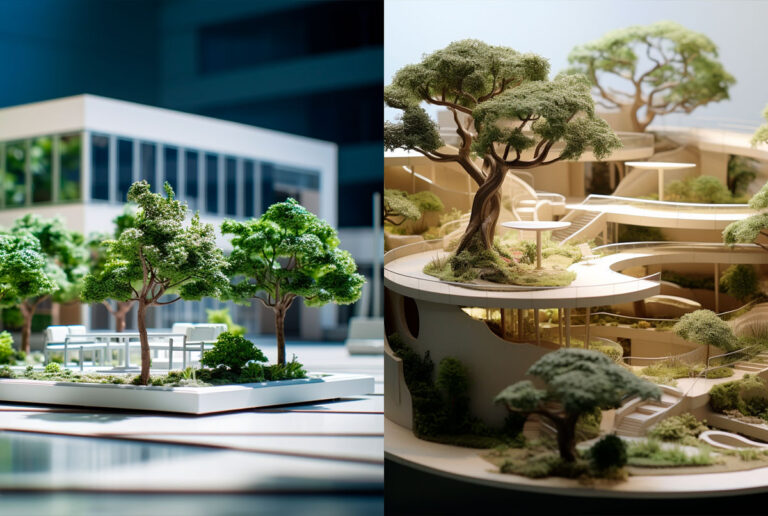
In architecture, this type of model is useful for showing how a building adapts to the terrain, how the exterior space is organized, or what role vegetation plays in the overall design. In urban planning, it allows for the study of routes, elevations, densities, and connections between different areas. And in landscape design, it becomes a medium for representing gardens, parks or interventions on the ground, with both technical and aesthetic criteria..

Tool for technical and educational dialogue
In addition to their application in design, these models facilitate teamwork, training, and environmental education. They serve as support tools in workshops, co-creation sessions, or presentations to diverse audiences, as they are intuitive and easy to understand. The model builds a common language among architects, technicians, managers, and teachers, allowing a direct exchange of ideas.

Museography, outreach and environmental planning
They are also used in educational contexts, such as exhibitions, interpretation centers, or museums, where the aim is to clearly and attractively showcase a natural or human-modified environment. These models help explain geographical phenomena, historical processes, or conservation projects. In environmental planning, they are used to visualize protected areas, territorial impacts, or landscape restoration proposals..
Conclusion and future vision for the landscape model
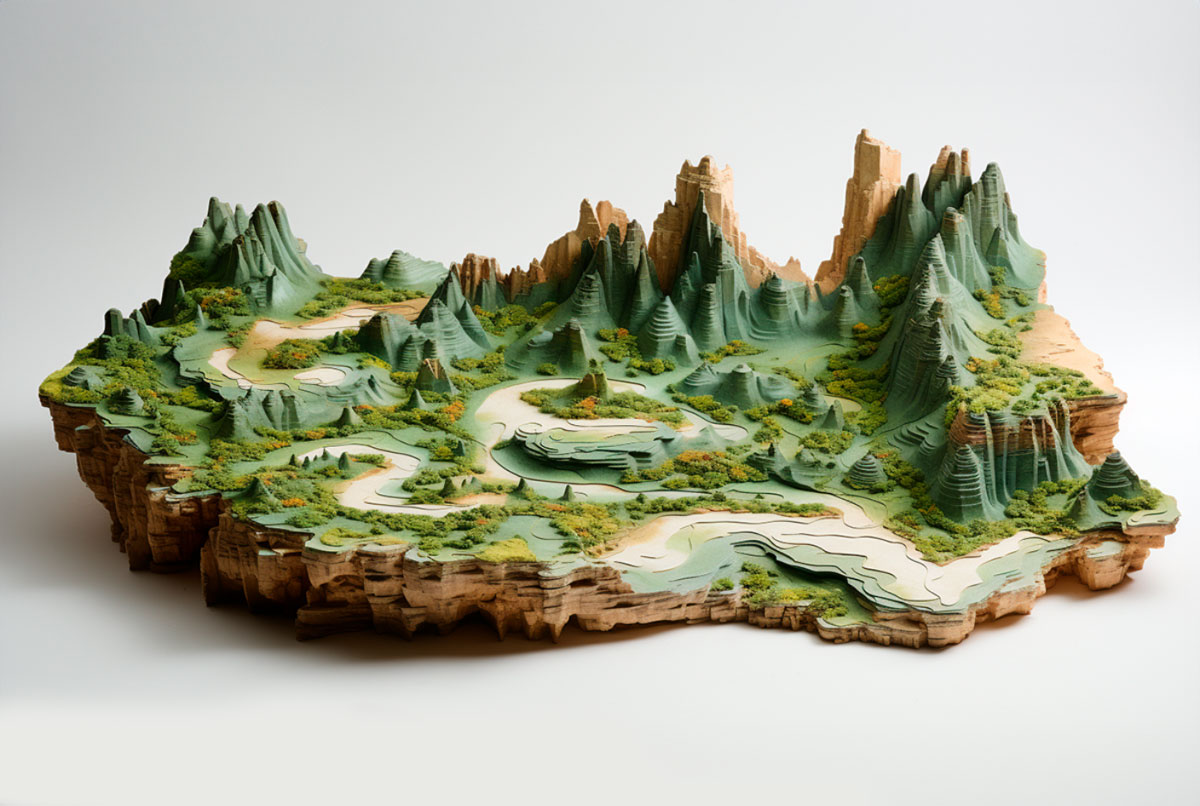
The landscape model remains a relevant tool, both for its ability to synthesize ideas and for the impact it has in making the link between project and environment visible. When well-designed, it facilitates decision-making, improves communication, and adds value to both internal processes and public presentations. It's not just about representing the terrain, but about telling a story with it..
Towards more interactive and technological models
It is becoming increasingly common to combine these models with technologies such as integrated lighting, sensors or even projection systems. These digital layers do not replace the physical, but rather complement it, expanding the experience and allowing for a richer reading.
At IA Manufacturing we continue to explore these possibilities for design landscape models that are not only observed, but experienced.

Did you enjoy this article?
Want to see other similar posts?

