Industrial model with interactive technology, Aritex's strategy to stand out at trade fairs

Industrial model with Aritex 2 interactive technology

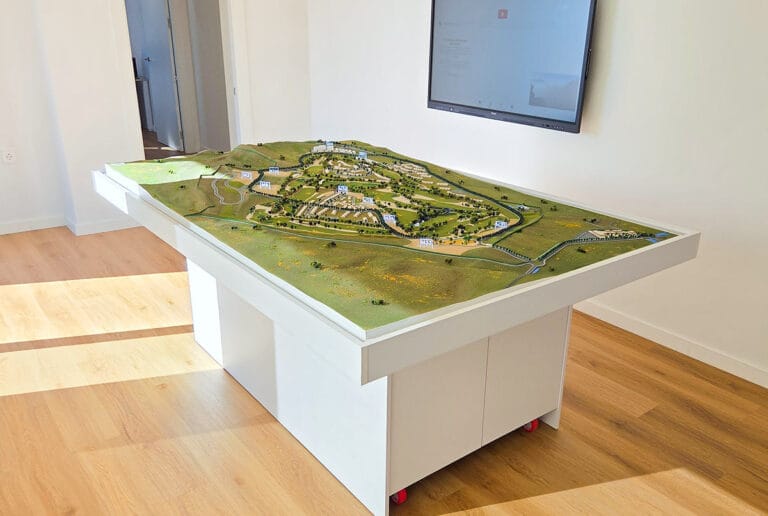
The interactive industrial model created for Aritex showcased a new way of communicating complex processes at the Paris Air Show. It meticulously represents a wing production plant and incorporates innovative features such as a touchscreen and neopixel lighting. Its design, optimized for safe transport, makes this model a strategic tool for trade shows, corporate presentations, and client meetings.

Maintaining and cleaning a model: tips to preserve its value

Clean architectural model

Maintaining and cleaning a model is not just about aesthetics: it's a fundamental part of its preservation and its ability to continue communicating clearly. In this article, you'll find a practical and detailed guide on how to properly care for them, what tools and products to use, and what mistakes to avoid. From dust to environmental exposure, every decision influences their durability and appearance. Learn how to protect this valuable work and ensure that each model continues to function as well as it did on day one.

Think about it, you really don't need to build "a model"«

Building a model is much more than simply representing an idea in three dimensions. It's an opportunity to connect with the public, convey a clear message, and create a memorable experience. But to achieve this, it's not enough to just start building. First, it's essential to clearly define what you want to convey, who your target audience is, and how it should be presented. In this article, we'll help you reflect on each step before construction: from choosing the level of detail to the visual style, materials, and degree of interactivity. Because a well-designed model isn't just something to look at: it's something to understand, feel, and remember.

Models with interactive lighting: uses, benefits, technology and costs

Model with interactive lighting

Interactive lighting models combine physical design with lighting technology to create guided and immersive visual experiences. Their use is expanding in museum displays, architecture, industry, and trade shows, thanks to their ability to communicate precisely and evoke emotion simultaneously.

Video mapping on interactive models: uses, challenges and costs

Video mapping on interactive models transforms physical models into living surfaces capable of telling stories, showcasing processes, and captivating the viewer. This technique is becoming an essential tool in museums, architecture, and events, thanks to its ability to communicate clearly and surprise through an immersive visual narrative.

An interactive industrial model that transforms processes into a visual experience

Biomet industrial interactive layout model

An interactive industrial model designed to communicate innovation and sustainability.
Designed for SC Tecno's Biomet project, this model faithfully reproduces the interconnected processes of a waste treatment plant. Its programmed lighting and technical design not only explain the process but also attract and impress at trade fairs and professional presentations.

Current trends in model design: the era of technological interaction

Model design has undergone a technological leap. Today, interactive models are transforming how projects are presented and understood, from museums to urban energy. In this article, we explore the key aspects of this revolution and the most innovative real-world examples developed by IA Manufacturing.

Estrella Levante and its industrial model with augmented reality

Industrial model with augmented reality of Estrella Levante

In this article, we'll tell you how we designed an augmented reality industrial model for the Estrella Levante brewery, integrated into its guided tour. This museum design project blends the physical and digital worlds to offer visitors an immersive, educational, and visually stunning experience.

AI in architecture: translating disruptive ideas into something buildable

Model of a balloon made by AI in architecture

What happens when artificial intelligence proposes ideas that challenge what we know as architecture? At IA Manufacturing, we experience it firsthand: surprising forms, seemingly impossible structures, and models that beg to be touched. This article is a reflection—and a shared experience—on how to implement disruptive ideas without losing sight of our principles or the physical models.